





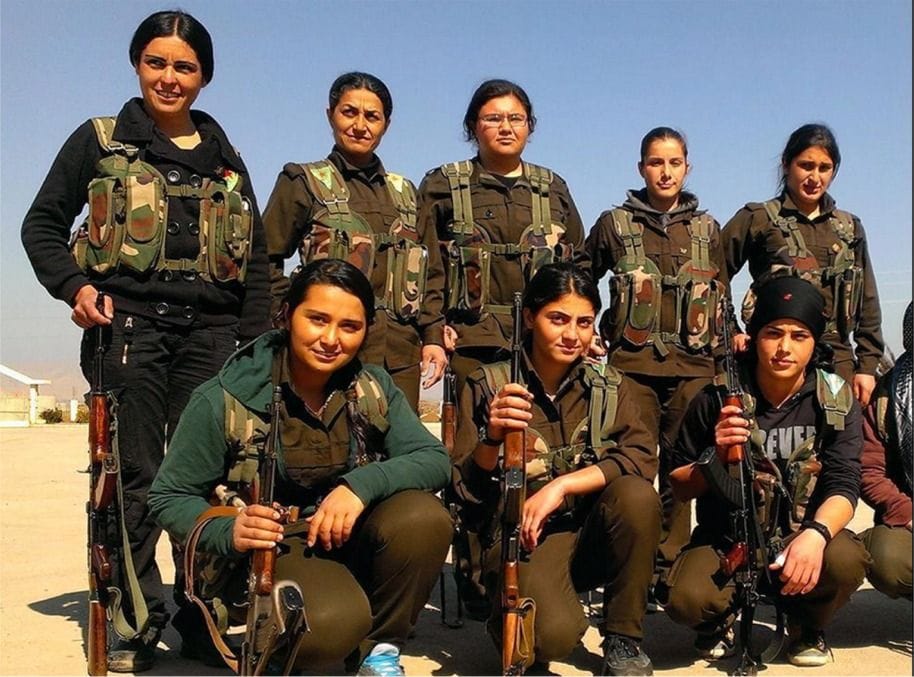
For more than a decade, Syria’s Kurds built an autonomous administration in the country’s northeast, promoting local governance, gender equality, and minority representation amid the chaos of civil war. But according to an opinion analysis by David L. Phillips in The Jerusalem Post, that experiment in self-rule has effectively collapsed under military pressure, regional power politics, and the loss of international backing.
The article draws historical parallels between the current crisis and a century of Kurdish struggles, beginning with the failed 1925 uprising led by Sheikh Said against the Turkish Republic. Phillips argues that Syrian Kurds once again face “betrayal and abuse” after years of resistance against both extremist groups and regional adversaries.
Turkish Pressure and the fall of Rojava
The Kurdish-led administration in northeastern Syria, widely known as Rojava, emerged during the Syrian civil war after government forces withdrew from Kurdish-majority areas in 2012. Supported by the US-led coalition, Kurdish fighters played a central role in defeating ISIS, especially during the 2014–2015 battle for Kobani.
Phillips describes the Kurdish defense of Kobani as heroic, noting that ISIS atrocities included “beheading, torture, and sexual violence.” Kurdish forces later expanded control across large parts of northeastern Syria under the Syrian Democratic Forces (SDF).
However, Turkey viewed the SDF’s dominant faction, the People’s Protection Units (YPG), as linked to the Kurdistan Workers’ Party (PKK), which Ankara classifies as a terrorist organization. Turkish-backed operations intensified after the collapse of the Assad regime in late 2024.
The article states that Turkish-backed Syrian National Army forces launched repeated offensives, displacing hundreds of thousands of Kurdish civilians and targeting infrastructure near the Tishrin Dam. According to the Syrian Observatory for Human Rights, more than 200,000 Kurds fled areas in Aleppo province during the fighting.
By early 2026, the Kurdish-led administration had reportedly lost around 70% of its territory. Phillips writes that without continued US military assistance, “the SDF was overwhelmed by jihadis working with the Syrian Armed Forces.”
Integration and uncertain future
Facing mounting losses, Kurdish leadership signed an integration agreement with Syria’s interim authorities on January 29, 2026. The deal formally ended 15 years of Kurdish self-rule and required the SDF to integrate into Syria’s national security and civilian institutions.
In return, Damascus promised limited reforms, including recognition of Kurdish identity and language rights and declaring Nowruz a national holiday. Phillips describes the measures as Syria’s “first formal recognition of Kurdish national rights since its independence in 1946.”
Still, the article warns that Kurdish leaders remain deeply skeptical of Damascus’s intentions. Phillips argues that international monitoring mechanisms may be necessary to ensure implementation of the agreement and protect minority communities.
The opinion piece also reflects on the ideological foundations of the Kurdish movement, particularly the influence of political theorist Murray Bookchin and Abdullah Öcalan’s vision of decentralized “democratic confederalism.” Phillips concludes that while the Rojava experiment inspired many, it proved “impractical and premature” in the current Middle Eastern political landscape.
Despite the setback, the article argues that Kurdish aspirations for self-determination are unlikely to disappear, even as they are forced to adapt to what Phillips calls “the new reality of an emboldened Turkey and an Islamist Syria.”
