





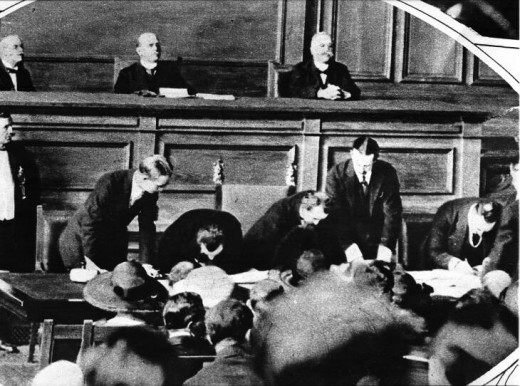
July 24 marks one of the most fateful anniversaries in modern Middle Eastern history. On this day in 1923, representatives from the newly emerged Republic of Turkey and World War I Allied powers—including Great Britain, France, Italy, and Greece—signed the Treaty of Lausanne at the Beau-Rivage Palace and Palais de Rumine in Lausanne, Switzerland.
While the treaty established the borders of modern Turkey, it effectively buried the Kurdish people’s aspirations for self-determination and statehood.
From promises at Sèvres to betrayal at Lausanne
Just three years prior, the 1920 Treaty of Sèvres had included Articles 62 and 64, which recognized the right to an autonomous Kurdish entity and a path toward full independence under international law. However, the geopolitics of the region shifted rapidly between 1920 and 1923.
Mustafa Kemal’s Ankara movement initially rallied support by promising a shared administration and local autonomy for Turks and Kurds. Once power was consolidated, those promises were quickly abandoned. Simultaneously, major global powers prioritized strategic and economic interests; for Great Britain, securing control over the oil-rich Mosul region outweighed Kurdish rights, while France prioritized the stability of its Syrian mandate.
When the multi-month Lausanne Conference concluded, Kurdish representatives were barred from participation, and all references to Kurdish autonomy were wiped clean from the final agreement.
The Partition of a Kurdistan
The borders drawn at Lausanne formally split Kurdistan across four separate states:
-
North Kurdistan (Bakur): Placed entirely under the sovereignty of the new Turkish Republic without consulting the local population.
-
South Kurdistan (Başûr): Subsumed under the “Mosul Question” and eventually integrated into British-mandated Iraq via the 1926 Treaty of Ankara.
-
Rojava (Syrian Kurdistan): Separated from the north along the Baghdad Railway line and placed under French control.
-
Rojhilat (Iranian Kurdistan): Remained under the sovereignty of the Qajar/Pahlavi Iranian state within pre-existing borders.
A Legal void and a century of denial
Articles 37 to 45 of the Lausanne Treaty recognized minority protections strictly for non-Muslim religious groups (Jews, Armenians, and Greeks). As an indigenous Muslim nation, the Kurds were left in a legal vacuum—neither recognized as a national minority nor granted collective rights.
This institutional denial paved the way for decades of forced assimilation, language bans, and systemic repression. The immediate aftermath triggered a wave of resistance and uprisings, including the Sheikh Said Rebellion (1925), Ararat (1930), and the Dersim Massacre (1937–1938).

The legacy today
103 years later, despite the existence of the Kurdistan Regional Government in Iraq and de facto autonomous arrangements in Rojava, the geopolitical framework built at Lausanne remains an obstacle to full Kurdish sovereignty and national unity. For the collective memory of the Kurdish people, Lausanne stands as a symbol of international betrayal and the diplomatic dagger that divided their homeland.
Source: Originally written and published in Kurdish by Berwarnews (“Lozan 1923: Roja ku xewna neteweyekê hat rawestandin”). English translation and editorial adaptation by Berwarnews English.
