






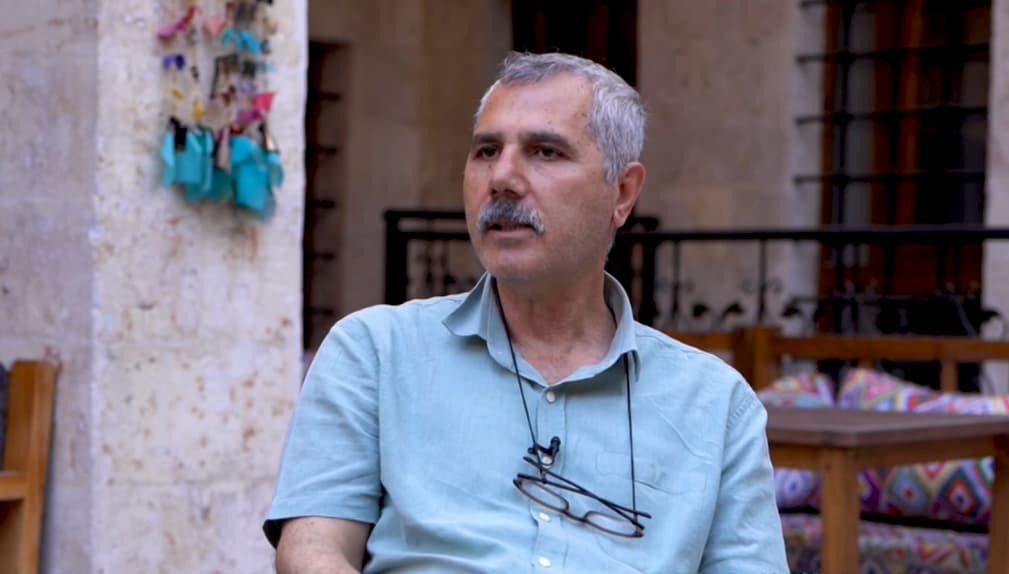
By Sami Tan
In 1999, the Metropolitan Municipality (after Mehdi Zana) came under Kurdish administration for the very first time. In the early 2000s, the municipalities began organizing cultural and art festivals. The first few years were just a beginning, and the Kurdish patriotic aspect was very weak. Local writers who wrote in Turkish were far ahead. Writing in Kurdish was not very fashionable, and Kurdish-language writers were still known only within a very narrow circle. There was conflict and strife among Kurdish organizations.
In 2003, the United States entered Iraq, Saddam’s regime collapsed, and the de facto status of the Kurds was moving toward official recognition. At that time, we were also preparing for a festival in Amed; we wanted to change the tone of the festivals and give them a genuine Kurdish character. Upon my suggestion, the municipal administration decided to hold a literature conference, and its organization rested on my shoulders.
Back then, I needed to go to the Kurdistan Region (Southern Kurdistan), but traveling back and forth was not easy; the border gate was under the surveillance and control of the MIT (Turkish Intelligence). I went up to the border, presented myself as a merchant researching the market for my goods, and managed to cross. We first went to Kirkuk; some Kurdish press friends were there, but because of the civil war, they could not cross into cities controlled by Kurdish organizations.
I took a friend with me, and we first went to Duhok, where we established contact with the Writers Union and invited them to the conference. They were very pleased. Afterwards, we crossed to Erbil (Hewlêr), where we visited the late Mehdi Khoshnaw; he generously hosted us and accepted our invitation. Then we moved on to Sulaymaniyah, where we visited figures such as the late Izzadin Mustafa Rasul. While there, we also conducted many interviews and discussions, which were published in the Kurdish press.
That year, our conference took place with the participation of writers and intellectuals from all four parts of Kurdistan and Europe. By doing so, we not only broke down existing borders, but we also shattered the shackles and constraints within our hearts and minds. Those people who previously looked at each other with hostile eyes were now opening the doors of their hearts to one another—because everyone knew that not only our culture and language, but also our destiny is one.
Following that, many panel discussions and conferences were held, but we still have not been able to clear away organizational obstacles; those multi-partied divisions and political conflicts remain a barrier to our unity. Today, when I pay attention to the evaluations and discussions on social media, I see nothing without insults and curses.
More than anyone else, we Kurds have suffered pain and sorrow from uniformity and mono-coloring; therefore, we must appreciate the value of pluralism and diversity better than anyone. We must be able to speak with one another without insults and curses so that we can sort things out. No one has the right to force their views and opinions onto others.
With this memory above, I wanted to draw attention to the importance of direct dialogue among Kurds themselves. We know that our mutual conflicts and fights only benefit our enemies. Very often, those ugly comments written under articles and evaluations bear the stamp of trolls. Yet, sometimes we ourselves fall into their trap. Anyone who insults a Kurdish leader, pioneer, or politician is serving the enemies of the Kurds. Let us compete in serving our people; let us compete in protecting and advancing our culture and language. Let us not compete in insults, arrogance, and curses—such things do not suit us.
 Sami Tan is a prominent Kurdish linguist, researcher, and writer specializing in the standardization, development, and sociopolitics of the Kurdish language. He has authored numerous studies and articles on Kurdish linguistic rights, cultural preservation, and political dynamics in the region.
