





The revitalization of marginalized languages cannot rely solely on official government policies; it requires a comprehensive ecosystem bridging education, business, culture, and cutting-edge digital technology. This was the key message from Aitor Aldasoro Iturbe, Deputy Minister for Language Policy of the Basque Government, in an exclusive interview with Berwarnews.
Speaking on the formation of the International Federation of Revitalizing Languages—a pioneer network that includes Kurdish alongside other minority languages—Aldasoro outlined the strategic vision behind the initiative. He stressed that Basque support extends beyond financial or institutional aid, aiming to empower linguistic communities to gain an authentic, independent voice on the international stage.
Beyond official policies: A multi-sector approach
Drawing from the Basque experience with Euskara, Aldasoro noted that securing the future of a marginalized language requires total societal engagement rather than top-down mandates alone.

Aldasoro Iturbe formulates his view on this as follows:
“The revitalisation of the Basque language has taught us that the future of a minority language does not depend solely on a language policy. The commitment of the community, the actions of public institutions, education, the social partners, the business world, culture and, today, the digital environment and technology must be combined.”
While acknowledging that the Basque model cannot be directly copied due to differing historical, legal, and political contexts, Aldasoro emphasized that core principles—such as language rights, immersion education, administrative integration, and community activation—offer valuable lessons globally.
The digital era and the risk of AI exclusion
Highlighting a critical shift in language preservation battles, the Deputy Minister warned that while adult learning systems and workplace integration were the primary battlegrounds in past decades, today’s greatest threat lies in the digital realm.
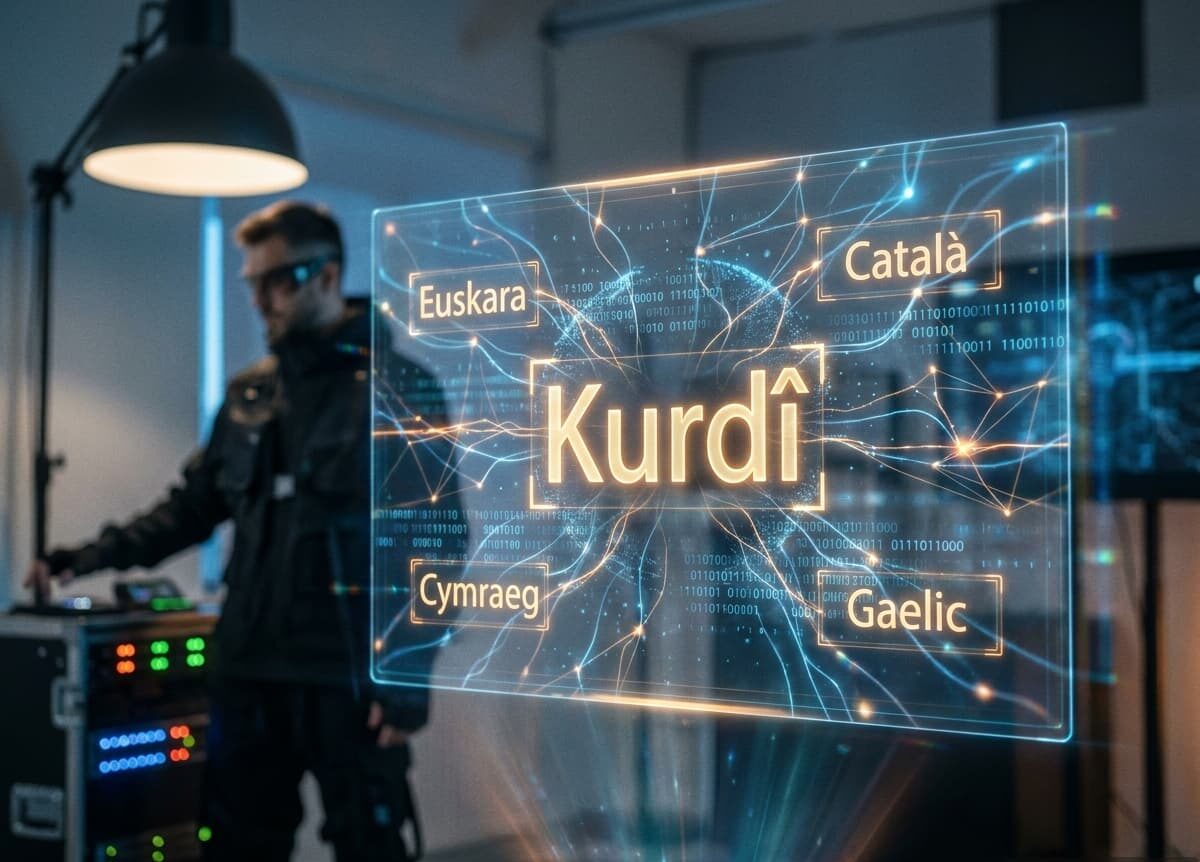
“Today we face a huge challenge: digitization and artificial intelligence and the era of language technologies,” Aldasoro warned. “If a language is not present in new technologies, future generations will find it increasingly difficult to use it in their everyday digital environment. Therefore, cooperation between minority languages must also have a technological dimension. The current strategy of the Basque Government, for example, promotes the integration of the Basque language into vocal knowledge, transcription, chatbots and correctors. To do this, it is essential to collect the data and create the corpus.”
To combat this, the Basque Government is actively developing tools for speech recognition, text conversion, digital proofreading, and AI chatbots—placing data collection at the heart of their long-term digital strategy.
Mutual learning: “We need Kurdistan’s experience too”
Closing his remarks, Aldasoro emphasized that the International Federation is built on two-way exchange rather than one-sided instruction.
“One of the aims of the federation is to share knowledge. Learning from each other” he concluded. “We also have a lot to learn from Kurdistan, Wales, Catalonia, Corsica or other linguistic communities. There’s the real strength of this network.”
