






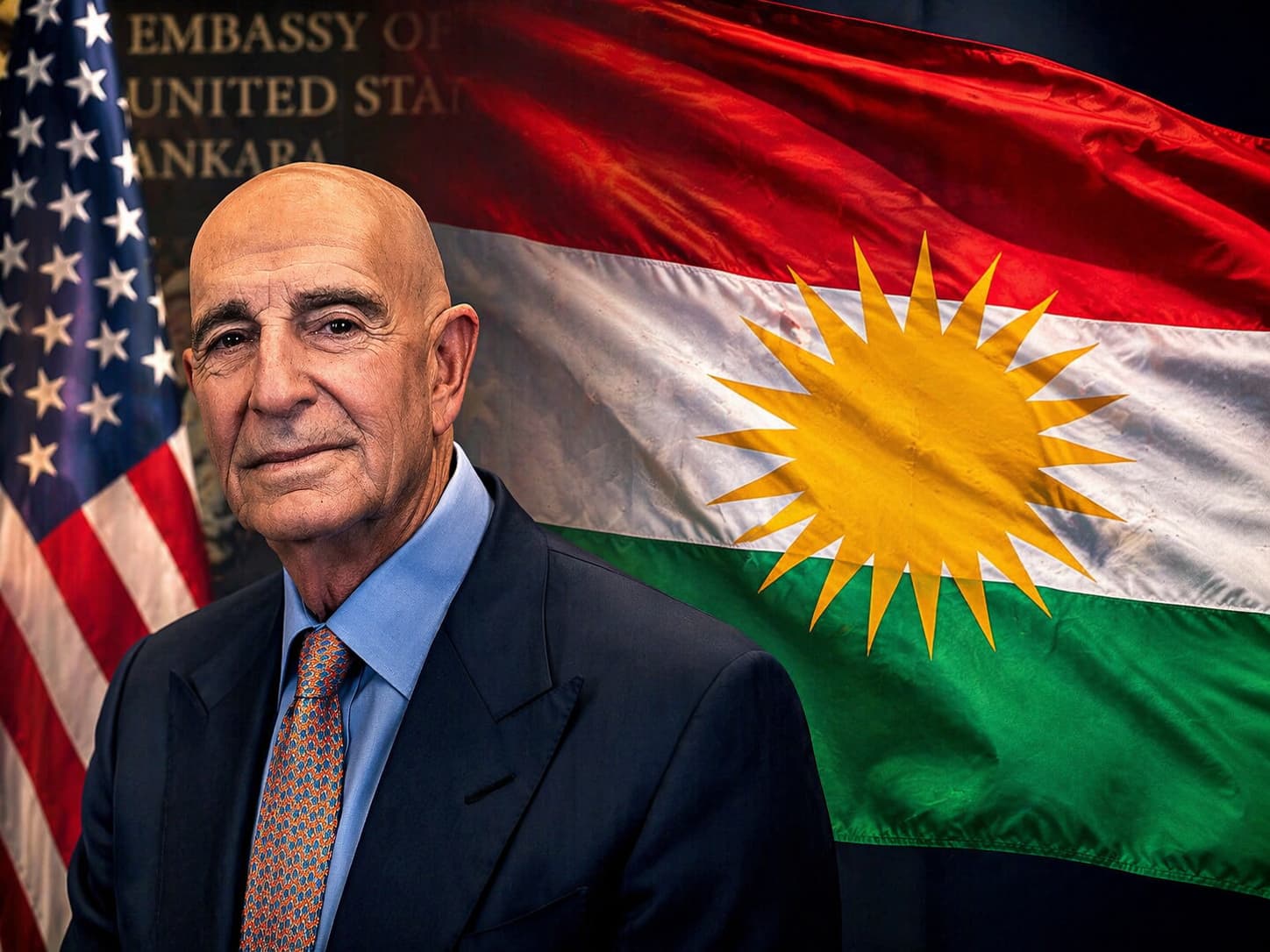
The absence of an active Kurdish ground front in Iran during the current U.S.–Israeli confrontation with Tehran has drawn increasing attention from policymakers and analysts. Despite the presence of armed Kurdish groups and favorable border geography with the Kurdistan Region of Iraq, Iranian Kurdish parties declined to play a leading role in military operations. Analysts say the key factor behind this hesitation is not military capability, but a crisis of political trust in Washington—largely shaped by recent U.S. policy in Syria under envoy Tom Barrack.
According to the analysis published by the Kurdish Center for Studies,Kurdish actors in Iran closely followed Washington’s handling of Kurdish forces in Syria, particularly the Syrian Democratic Forces (SDF). Since Barrack’s appointment in 2025, U.S. policy appeared to prioritize rebuilding a centralized Syrian state, encouraging Kurdish forces to integrate into national institutions rather than maintain autonomous structures. Barrack’s public criticism of federalism in Iraq and Syria reinforced concerns among Kurdish groups that Washington may no longer support decentralized governance models.
From the Kurdish perspective, these developments signaled a shift away from long-standing U.S. partnerships. Reports indicating reduced U.S. support for Kurdish positions during military tensions in northern Syria in early 2026 further deepened skepticism. Kurdish leaders feared that participation in a new conflict against Iran without firm legal and political guarantees could leave them exposed to retaliation from regional powers after the war.
Statements from Kurdish representatives suggested they were unwilling to position themselves at the forefront of any ground offensive without assurances regarding political rights, decentralization, and post-conflict protection. Observers argue that the perceived U.S. retreat from commitments in Syria served as a warning that military cooperation may not translate into lasting political backing.
As a result, Washington’s inability to reassure Kurdish actors about the “day after” the war appears to have limited its ability to mobilize Kurdish forces in Iran. The situation highlights how shifts in U.S. regional strategy under Tom Barrack may have weakened confidence among Kurdish partners, reducing Washington’s leverage in shaping events beyond Syria’s borders.
