






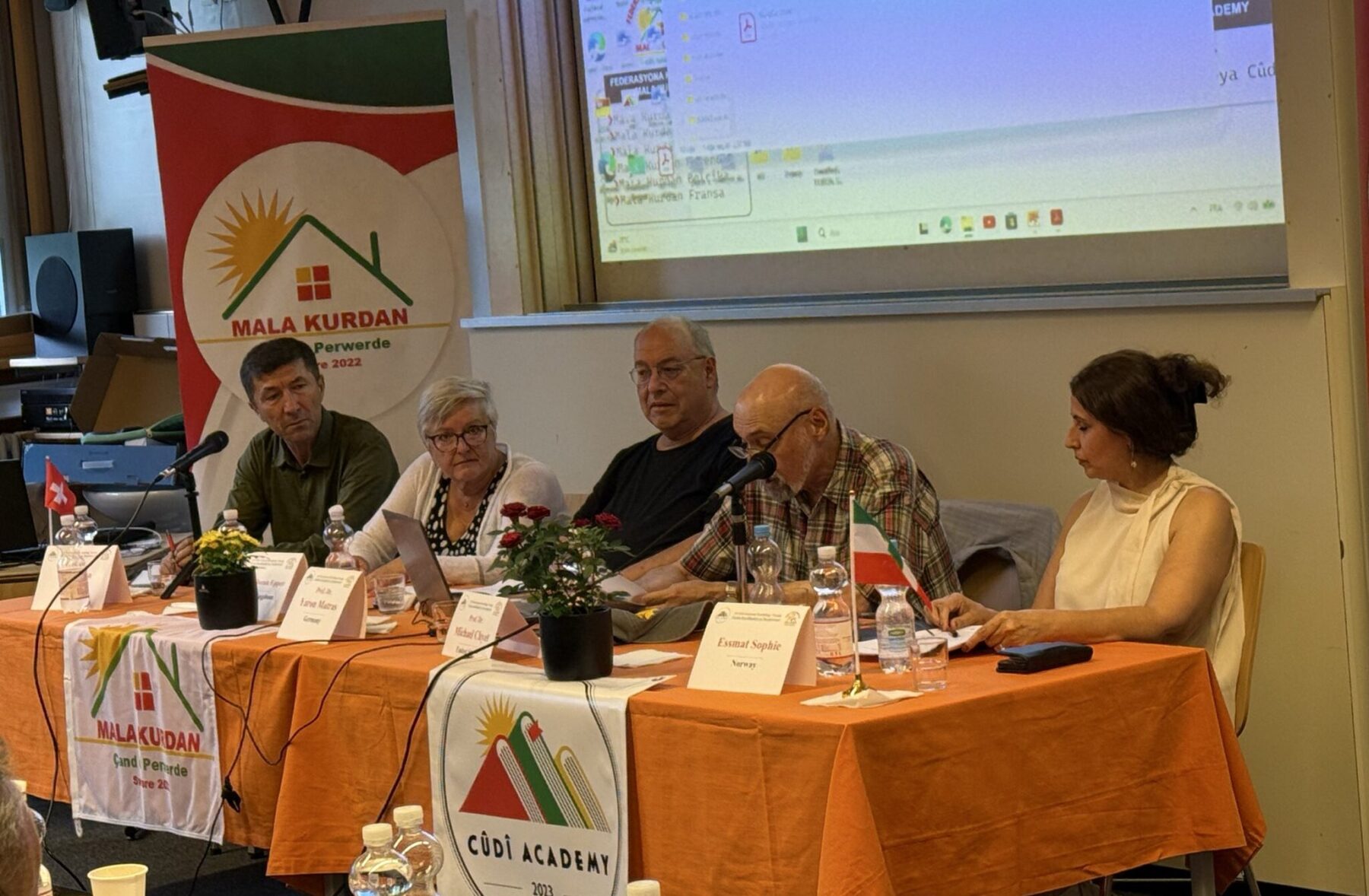
The inaugural International Forum of Kurdish Studies has successfully concluded its landmark three-day run, bringing together a prestigious cohort of global academics, linguists, and researchers. Jointly organized by the Switzerland-based Mala Kurdan Federation and its academic branch, the Cûdî Academy, the event established an unprecedented independent platform to debate the future of Kurdish identity, language, and geopolitical standing.
Under the theme “Kurdish Studies in the New World Order,” the forum welcomed prominent experts from the United States, Israel, Germany, France, and across Europe. The multidisciplinary agenda spanned four core academic sessions covering research methodologies, Middle Eastern geopolitics, diaspora experiences, and language standardization.
A new paradigm for Kurdish unity
A major highlight of the gathering was the active participation of Prof. Dr. Ofra Bengio of Tel Aviv University. Bengio praised the forum’s unique, collaborative energy, describing the atmosphere as a rare blend of rigorous professional intellectualism and deep, familial solidarity. “Frankly, until a few months ago I had almost lost hope,” Bengio remarked, urging the younger generation of Kurdish scholars to maintain this momentum and guard against political division.
Translating culture into economic power
On the linguistic front, world-renowned philologist Prof. Dr. Michael L. Chyet delivered a compelling call to action, arguing that for Kurdish to secure its long-term global survival, it must transition into a medium of modern commerce. Chyet emphasized that while Kurdish boasts immense historical and literary richness, it lacks integration into business. “We need to make Kurdish an economic language,” Chyet stated, highlighting that economic utility is a primary driver of a language’s modern survival.
Bridging scholarship with community
The forum uniquely integrated high-level academic debate with cultural celebration. While scholars engaged in strategic roundtables to plan future research networks, families participated in a vibrant camp program. The cultural lineup featured musical concerts, traditional folk dance, and performances of the Kurdish national anthem, Ey Reqîb, alongside specialized art exhibitions and activities designed for children.
The driving force behind this historic gathering, the Mala Kurdan Federation, began in Switzerland in 2022 as a network of university graduates. Today, the organization spans Europe and North America, offering humanitarian aid, language courses, and scholarships. Through the Cûdî Academy, the federation continues to champion independent, pluralistic research, providing a rare neutral space where secular, religious, and liberal voices can unite for the advancement of Kurdish heritage.
