






A relentless series of drone and missile strikes launched by Tehran ripped through the Kurdistan Region between Thursday and late Friday, targeting critical security and political installations.
The early hours of Friday morning saw heavy activity over the skies of Erbil, where the U.S.-led Coalition forces intercepted and shot down eight bomb-laden kamikaze drones between 4:19 AM and 5:25 AM. While Erbil escaped human casualties due to air defense intervention, Sulaimani bore the brunt of the devastation. A total of seven missiles targeted villages across the province, with four striking Zirgwez, one hitting Qasdri, and two landing near Grdi Kopani. The precision strikes directly targeted the camps of the Kurdish dissident group, the Komala Toilers of Kurdistan, resulting in the immediate deaths of nine of its members.
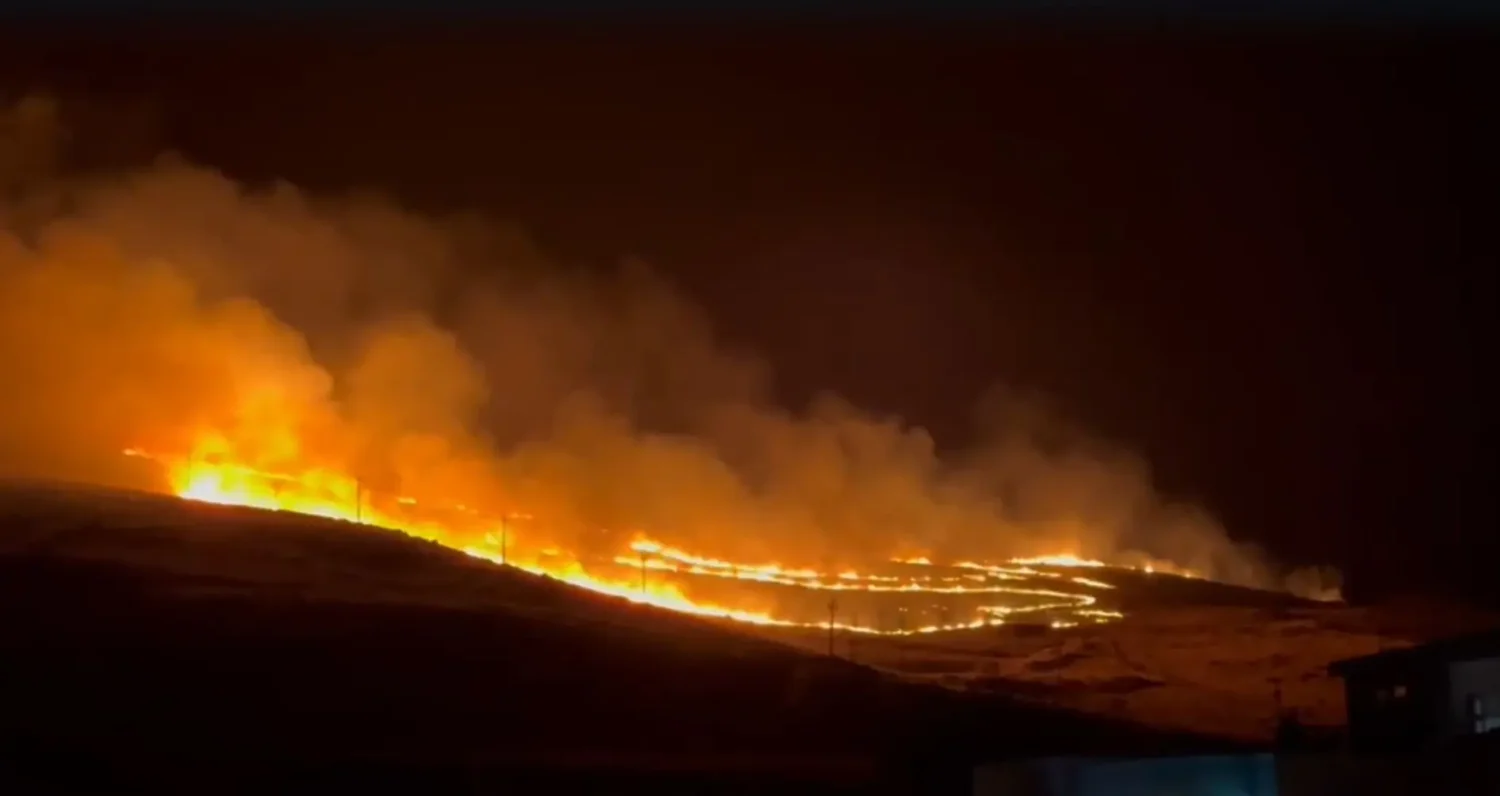
By Friday evening, a second wave of strikes hit Tasluja, located just north of Sulaimani’s Jalal Talabani International Airport. A security source confirmed that an arsenal belonging to the Peshmerga 70th Unit was directly targeted in the attack, igniting massive fires that forced emergency response teams and ambulances to deploy in large numbers.
Kurdistan region: “We are not a part of this war”
Local Kurdish authorities reacted with fierce condemnation, emphasizing their stance of strict neutrality. The Kurdistan Region Presidency and the Kurdistan Regional Government issued joint statements warning that Tehran’s actions constitute a dangerous escalation that directly threatens the stability of Iraq.
Expressing deep frustration over the spillover of the conflict, Sulaimani Governor Haval Abubaker released a public statement:
“We strongly condemn the attacks on the city of Sulaimani and Kurdistan. We reiterate that the Kurdistan Region and the local government of Sulaimani, maintaining neutrality and responsibility, are not a part of the war that has engulfed the region.”

Emirates and Qatar: “A blatant violation of international law”
The geopolitical shockwaves of the attack prompted immediate pushback from Gulf Arab states. The United Arab Emirates (UAE) Ministry of Foreign Affairs issued a strong rebuke, describing the strikes as a “blatant and clear violation” of Iraqi sovereignty. The UAE reaffirmed its full solidarity with Erbil and Baghdad, backing all protective measures required to preserve territorial integrity.
Simultaneously, Qatar’s Foreign Ministry strongly condemned the escalation, classifying Tehran’s actions as a “flagrant breach of the principles of international law” and warning that the ongoing Iran-US hostilities must not be fought at the expense of regional peace.
The rising human cost
According to the Community Peacemaker Teams (CPT), a US-based human rights monitoring organization, the human toll on the Kurdistan Region has mounted drastically. Since the outbreak of the Iran war in late February, attacks launched by Iran and its affiliated proxy groups in Iraq have resulted in 144 total casualties within the Kurdistan Region—with 30 people losing their lives and 114 others sustaining severe injuries.
