






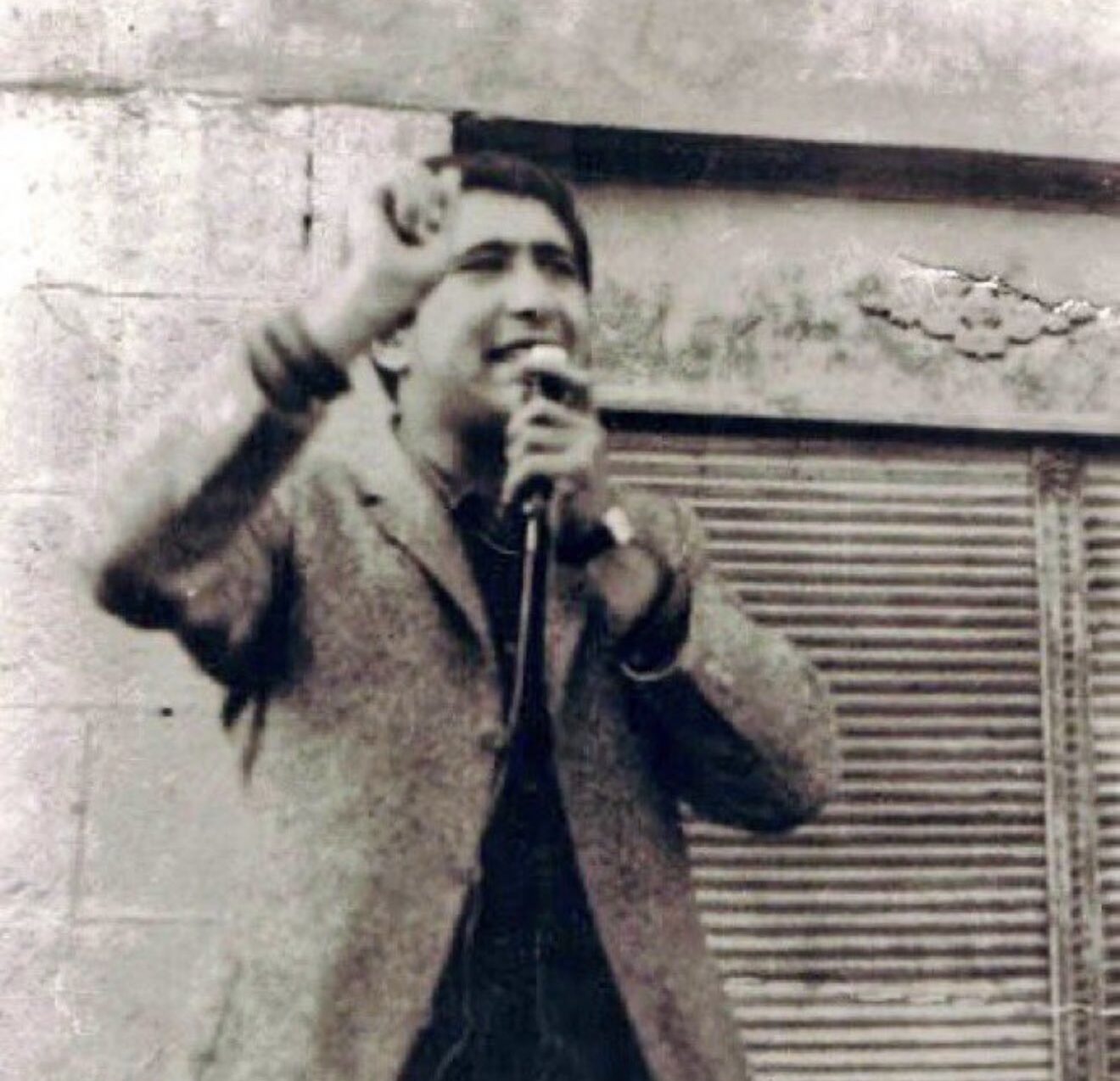
Mehdi Zana, one of the most iconic and pivotal figures in modern Kurdish political history and the former mayor of Diyarbakır (Amed), passed away on August 29, 2026, at the age of 86. Zana, who had been suffering from Chronic Obstructive Pulmonary Disease (COPD) for an extended period, died at a private hospital in Diyarbakır where he had been admitted for treatment.
His passing marks the end of an extraordinary era in Northern Kurdistan and Turkey’s political landscape. Zana’s historic triumph in the 1977 local elections reshaped the region’s political order, while his unyielding stance inside Diyarbakır’s infamous Military Prison No. 5 turned him into an international symbol of human rights and democratic conviction.
📌 Mehdi Zana:
“The people did not vote for me simply for public services; they voted for me because I spoke Kurdish and boldly stood up for Kurdish identity.”
The 1977 election: Breaking the feudal hold
The 1977 municipal elections in Diyarbakır are widely regarded by political historians as a watershed moment for Kurdish political self-determination. Prior to the vote, local politics and regional economics were firmly dominated by traditional local notables, prominent feudal families, and established state-aligned political parties such as the Republican People’s Party (CHP), the Justice Party (AP), and the National Salvation Party (MSP).
Zana entered the race as an independent candidate backed by the Özgürlük Yolu (Path of Freedom) / Socialist Party of Turkish Kurdistan (TKSP) faction. In a fiercely competitive race, another key Kurdish political movement, the DDKD, fielded lawyer Yahya Mehmetoğlu as an independent.
Overturning decades of comprador political hegemony, Zana secured a decisive victory with 6,518 votes, while Mehmetoğlu took second place with 4,513 votes. Together, the two independent pro-Kurdish candidates decisively outpolled all state-backed establishment parties combined.
Zana’s victory dismantled the traditional hierarchy between the political “center” and the “periphery.” A tailor by trade hailing from the Silvan (Farqîn) district, he defeated Diyarbakır’s long-standing political dynasties. Beyond administrative reform, his tenure formally brought the Kurdish language and identity into municipal politics for the first time.
Mehdi Zana (1940–2026)
- Early Life: Born in Silvan, Diyarbakır (Winter 1940). Worked in a tailor’s shop during his youth, describing it as his primary “political academy.”
- Political Career: Joined the Workers’ Party of Turkey (TİP) and Revolutionary Eastern Cultural Centers (DDKO); co-founded the Socialist Party of Turkish Kurdistan (TKSP).
- Historical Milestone: Elected Mayor of Diyarbakır in 1977 as an independent candidate, becoming the first pro-Kurdish mayor of the city.
- Imprisonment & Resistance: Arrested following the September 12, 1980 military coup. Spent 16 years in prison, enduring extreme torture in Diyarbakır No. 5 Prison; recognized by Amnesty International as a Prisoner of Conscience.
- Later Years: Lived in European exile before returning to Diyarbakır in 2004 to focus on writing memoirs and literary works.
Coups, imprisonment, and literary legacy
Zana’s period of municipal transformation was abruptly cut short by the September 12, 1980 military coup. Arrested shortly after the junta seized power, Zana was incarcerated in Diyarbakır Military Prison No. 5—one of the world’s most notorious sites of systematic torture and human rights abuses. His refusal to succumb under brutal prison conditions led Amnesty International to officially designate him as a Prisoner of Conscience.
Released after 16 years of imprisonment, Zana spent years in European exile before eventually returning to his home town of Diyarbakır in 2004. In his later years, he devoted himself to literature, authoring pivotal historical accounts and memoirs in both Kurdish and Turkish.
Major Published Works:
-
Bekle Diyarbakır (1991, Kurdish)
-
Vahşetin Günlüğü: Diyarbakır Zindanlarından (1992, Turkish)
-
Evîna Dilê Min (1993, Kurdish)
-
Sevgili Leyla: Uzun Bir Sürgündü O Gece (1995, Turkish)
-
Zelal / Zelâl: Yeniden Doğuş (1996, Turkish)
-
Çarşiya Silîva (2002, Kurdish)
-
Parastina Min (2004, Kurdish)
-
Ay Dayê (Novel, 2005, Kurdish)
-
Diyarbakır 5 No’lu (2012, Turkish)
