





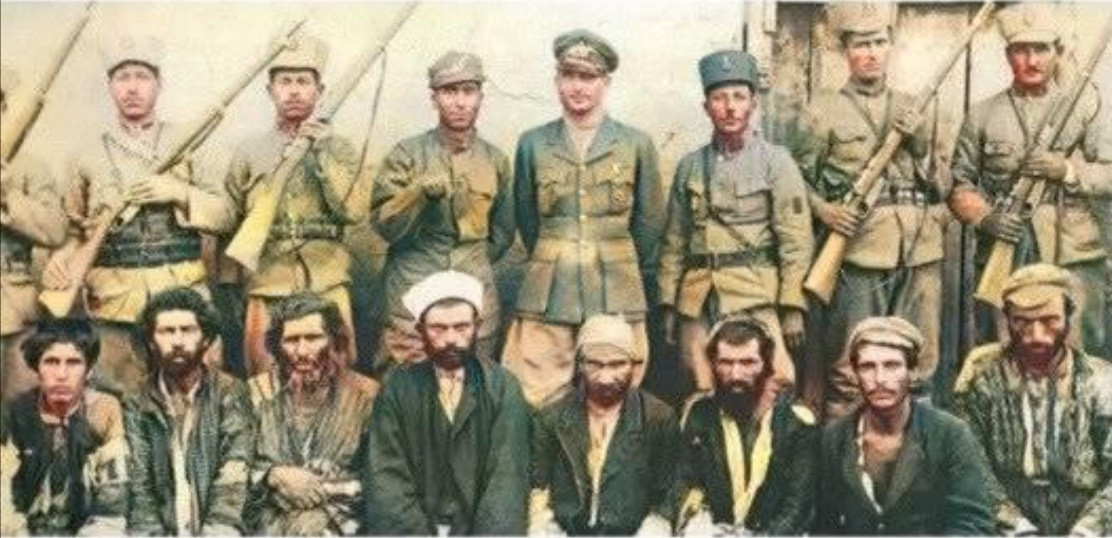
The Ararat rebellion, known in Turkish as Ağrı İsyanı, was a major Kurdish uprising against the Turkish Republic in 1930. Centered in Ağrı Province and the mountainous region surrounding Mount Ararat, the revolt was led by Kurdish commander İhsan Nuri and supported by tribal groups and the Kurdish nationalist organization Xoybûn.
The rebellion emerged during a period of increasing pressure on Kurdish identity, autonomy, and political organization in the early years of the Turkish Republic. Earlier tribal resistance led by İbrahim Heski in 1926 had already revealed growing tensions between Kurdish communities and Ankara. Fighting intensified in 1930 after Turkish forces launched a large-scale military campaign to suppress insurgent positions across Ağrı, Van, Bitlis, and surrounding regions.
Kurdish fighters mounted resistance across eastern Anatolia, with clashes reported around Mount Tendürek, Erciş, Iğdır, and Van. However, Turkish military superiority — particularly the use of aircraft and aerial bombardment — gradually shifted the balance of the conflict. According to contemporary accounts and later memoirs by İhsan Nuri, sustained bombing campaigns devastated villages and forced Kurdish fighters into retreat across the high mountains surrounding Ararat.

Zilan Valley Massacre
During the final phase of the campaign, the events remembered as the Zilan Valley massacre unfolded between 12 and 13 July 1930 in the Zilan Valley region near Van and Ağrı.
Turkish military operations targeted villages believed to support the uprising. Contemporary reports from the Turkish newspaper Cumhuriyet described extensive bombardments around Mount Ararat and reported mass casualties in the valley. One report published on 16 July 1930 stated that “the Zilan Valley is filled to the brim with human corpses.”
British diplomatic reporting later described the operation as having been carried out against a limited number of armed rebels alongside many civilians and non-combatants. Casualty estimates vary, but Kurdish historical accounts and several contemporary sources describe the killings as one of the deadliest episodes of the campaign.
The events in Zilan later became deeply embedded in Kurdish collective memory. Kurdish writer Yaşar Kemal referenced the trauma of the events in interviews and literary works, while decades later Selahattin Demirtaş and other members of parliament called for an official investigation into the killings.
By September 1930, the rebellion had been militarily defeated. Turkish forces reestablished control over the region, and in 1932 Turkey and Persia signed a border agreement granting Turkey greater control over the Mount Ararat frontier, limiting cross-border movement by Kurdish fighters.
Today, the Ararat rebellion and the Zilan Valley events continue to occupy a significant place in Kurdish historical consciousness, symbolizing both resistance and the unresolved debate over memory, identity, and state violence in the region.
