




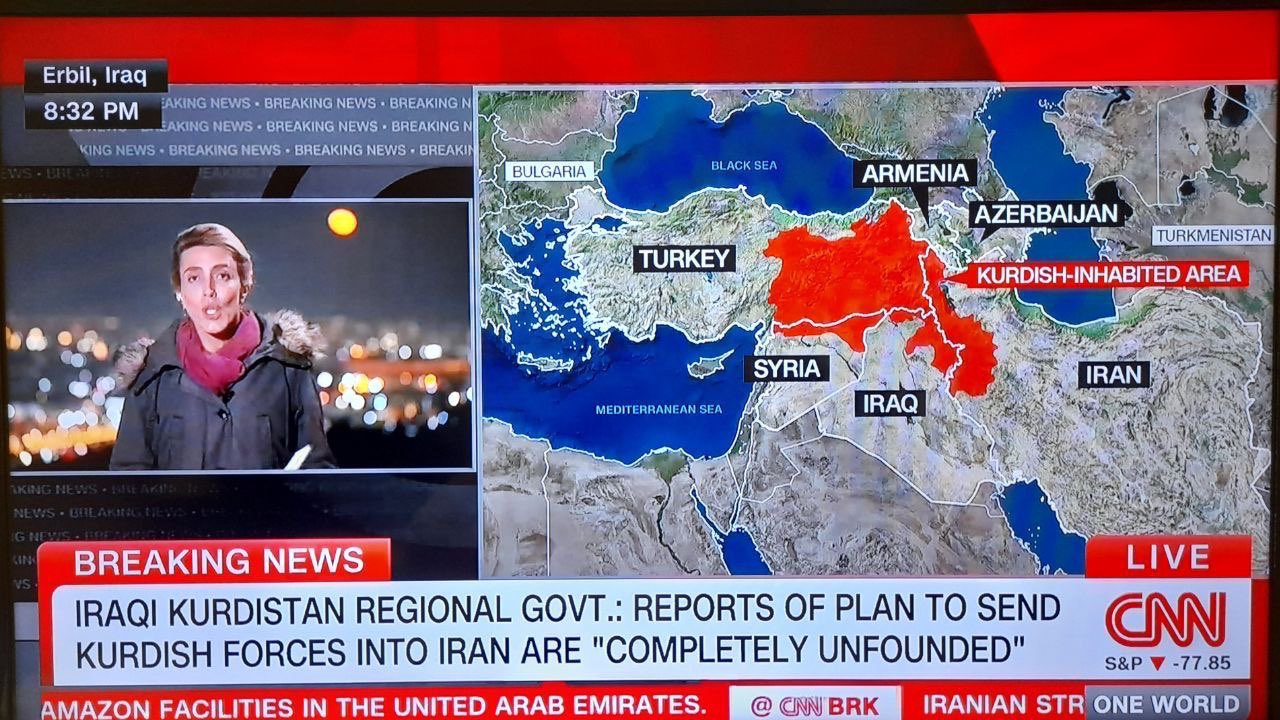
A broadcast by CNN has sparked a wave of anger in Turkey after a graphic used in coverage of the escalating conflict involving Iran highlighted regions populated by Kurds across the Middle East.
The segment aired on March 5, 2026, during reporting on the ongoing U.S.–Israel military campaign against Iran. During the program, CNN displayed a map marking Kurdish-inhabited areas in red across southeastern Turkey, northern Iraq, northeastern Syria and western Iran. Despite the outrage, the graphic did not depict a Kurdish state or territorial claims.
Similar maps have appeared in Western media for decades and were frequently used during the war against Islamic State in 2014 to explain Kurdish militias’ role in fighting the jihadist group.
Ankara condemns “misleading” depiction
Turkey’s Directorate of Communications quickly condemned the broadcast, accusing the network of presenting a “misleading and reductive” portrayal of the region. Officials said such maps risk creating artificial geopolitical interpretations and undermining national unity.
The statement stressed that the country’s population of roughly 86 million citizens forms a unified society regardless of ethnic background and warned against linking Kurdish citizens to political or militant actors.
Authorities called on international media organizations to show greater editorial responsibility when covering sensitive regional issues.
Social media backlash and calls to shut CNN Türk
The controversy rapidly spread across Turkish social media, where users accused CNN of promoting separatism and supporting Kurdish militant groups.
Many posts described the broadcast as an “insult” or “treachery,” while some demanded that CNN Türk — the network’s Turkish affiliate — apologize or even cease operations.
For critics, the graphic revived long-standing fears in Turkey that foreign powers could support Kurdish territorial ambitions, an issue deeply rooted in the country’s political history.
A Familiar media–politics flashpoint
This is not the first time maps showing Kurdish population zones have triggered political disputes. Similar controversies occurred during earlier conflicts in Syria and Iraq, where Kurdish forces emerged as major actors.
The latest episode highlights how even a demographic map can ignite geopolitical tensions in a region where borders, identities and historical grievances remain highly sensitive.

