






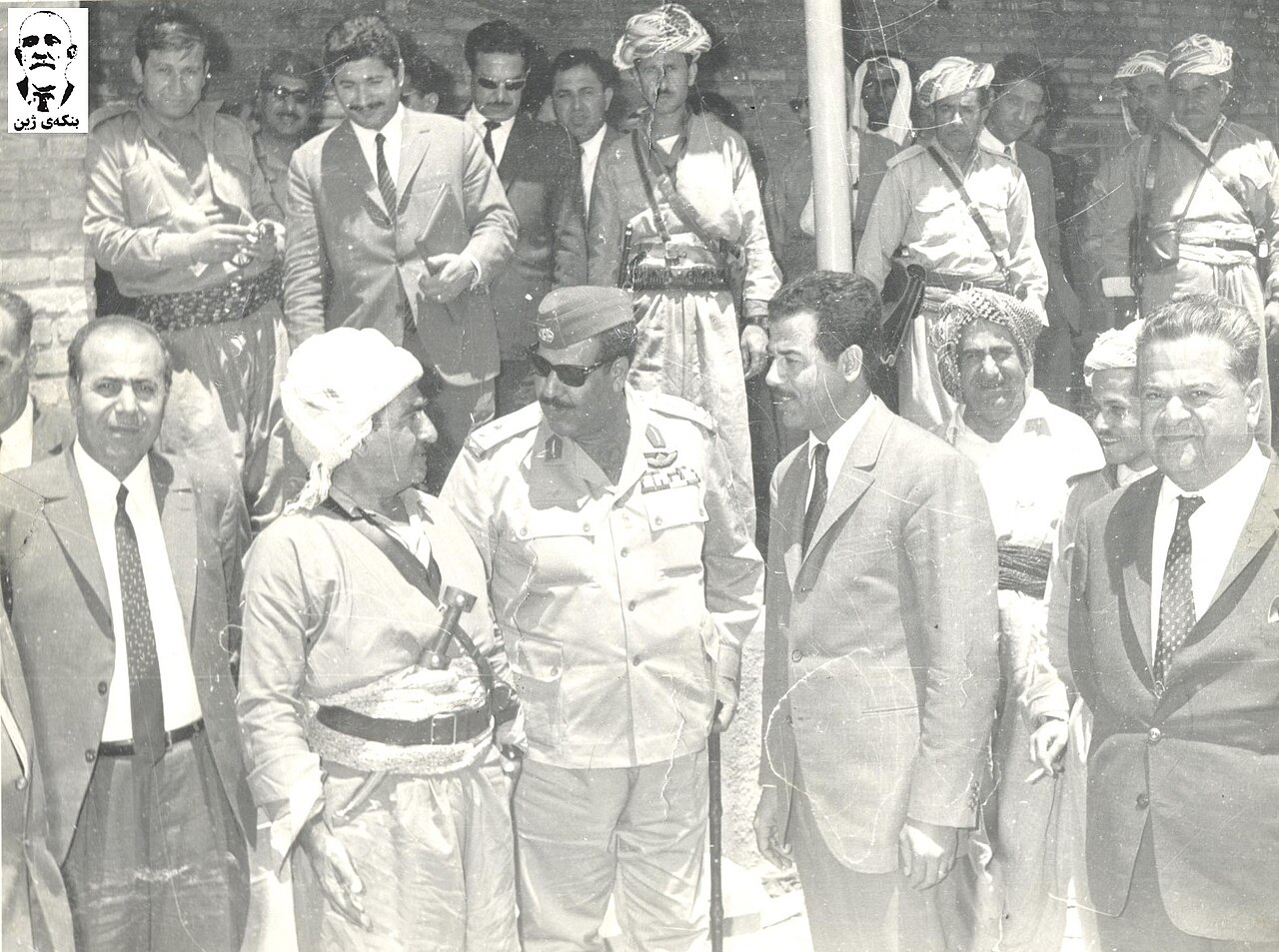
On March 11, 1970, the Iraqi government and Kurdish leader Mustafa Barzani reached a landmark accord aimed at ending years of fighting between Baghdad and Kurdish forces. The agreement followed the First Iraqi–Kurdish War and was considered the most serious effort at the time to resolve the long-standing conflict.
The deal proposed the creation of an autonomous Kurdish region consisting of three Kurdish-majority governorates and other districts confirmed by census. It also recognized the dual national identity of Iraq, declaring that the Iraqi people were made up of both Arab and Kurdish nationalities.
Several provisions were intended to strengthen Kurdish rights and participation in the state. Kurdish was to become an official language alongside Arabic in Kurdish-majority areas and would be taught across Iraq. Kurds were also promised representation in government institutions, including senior posts in the cabinet and the army.
The agreement further allowed Kurds to establish their own student, youth, women, and teachers’ organizations, and pledged economic development for the Kurdish region. Displaced Kurdish families were promised the right to return home, and financial support was to be provided to families affected by war.
Implementation and growing distrust
Initially, the agreement appeared promising. Within months, some provisions were implemented, and by the end of 1970 Barzani expressed cautious optimism about Kurdish autonomy.
However, tensions soon resurfaced. The Iraqi government delayed the census needed to determine the borders of the autonomous region, while also launching Arabization policies in oil-rich areas such as Kirkuk and Khanaqin. Kurdish leaders also accused the ruling Ba’ath Party of attempting to undermine the deal, including alleged assassination attempts against Barzani’s family.
As trust eroded, much of the agreement remained unfulfilled. Promises of political representation and autonomy were widely seen as symbolic rather than genuine.

Collapse and renewed war
In 1974, the Iraqi government introduced a new autonomy proposal without negotiations. Kurdish leaders rejected the plan, leading to the outbreak of the Second Iraqi–Kurdish War.
Regional geopolitics further complicated the conflict. In 1975, Iraq and Iran signed the Algiers Agreement, under which Iran withdrew support for Kurdish forces in exchange for territorial concessions from Iraq in the Shatt al-Arab waterway dispute. Without Iranian backing, Kurdish resistance weakened significantly.
The aftermath saw intensified Arabization campaigns and displacement of thousands of Kurds. Many fled abroad, with countries such as Austria offering asylum to refugees from camps in Iran.
