





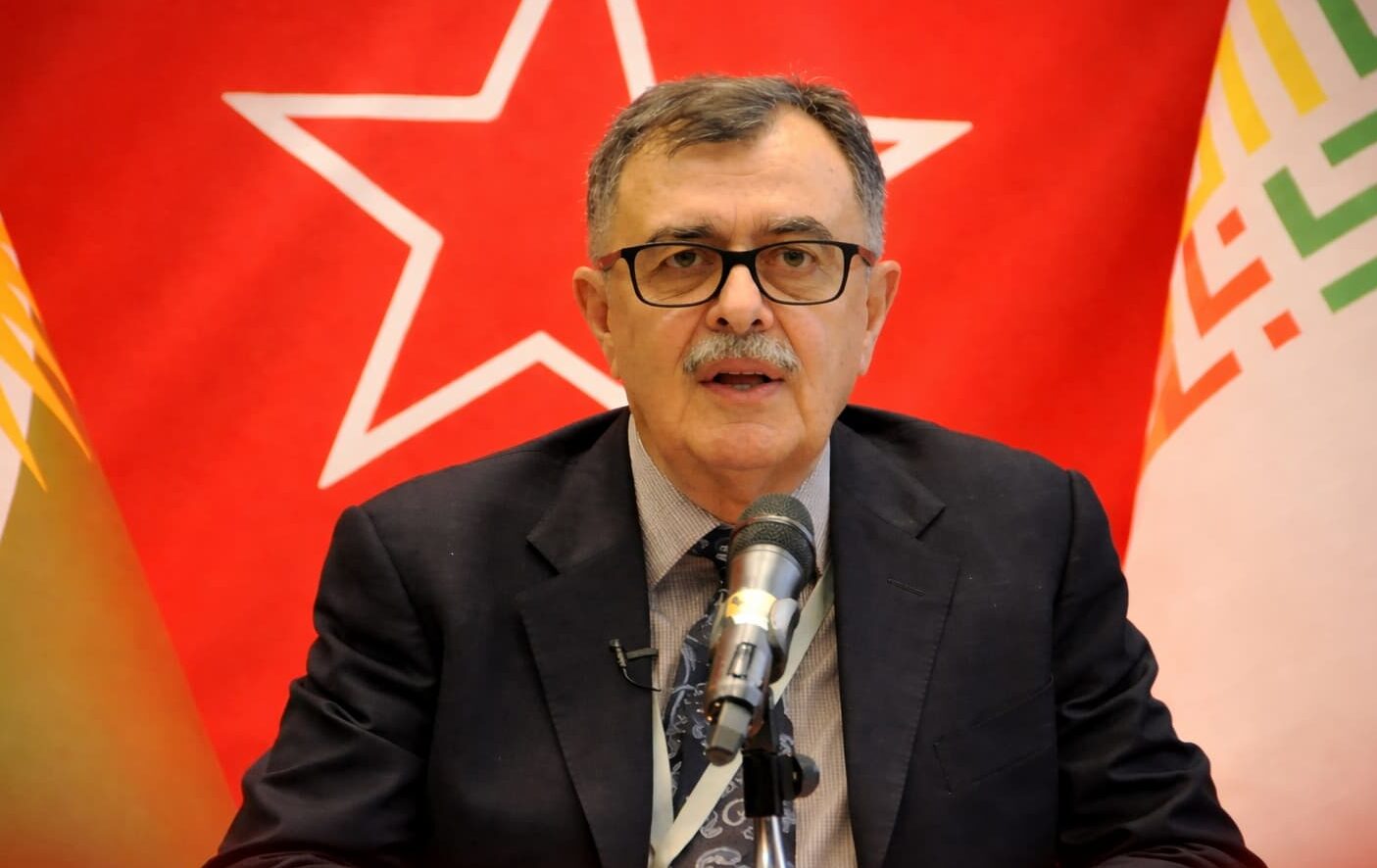
Abdullah Mohtadi, leader of the Komala Party of Iranian Kurdistan, has said federalism is the most suitable political system for Iran, arguing that the country’s ethnic and cultural diversity makes centralized rule unsustainable.
In an interview with Rudaw conducted in Brussels, Mohtadi described Iran as “the best country for implementing federalism,” emphasizing that power-sharing among its various national groups would strengthen democracy and ensure long-term stability. He pointed to Iran’s composition of multiple ethnic communities—including Kurds, Persians, Azeris, and others—as a key reason for adopting a federal structure.
“Iran is the remnant of a large empire,” he said, adding that recognizing different identities through a democratic system would help the country achieve internal peace and improve relations with its neighbors.
Mohtadi compared the situation to Iraq, where Kurdish autonomy was once seen as unlikely but eventually materialized under favorable conditions. He suggested that similar opportunities could emerge in Iran if opposition movements continue to push for structural change.
Kurdish groups stay out of conflict
Addressing the ongoing conflict involving Iran, the United States, and Israel, Mohtadi said Kurdish opposition groups have deliberately chosen not to participate. He described the war as rooted in the policies of the Iranian government but stressed that Kurdish forces did not see conditions as suitable for joining the fighting.
“We neither viewed Iran as sufficiently weakened nor did we see mass public uprisings,” he said, indicating that timing remains a critical factor in their strategy.
Mohtadi also rejected accusations by Tehran that Kurdish groups are linked to Israel, calling such claims routine rhetoric used against opponents. He noted that even figures like Mohammad Khatami have faced similar allegations in the past.
On the prospects for peace, Mohtadi expressed skepticism, saying the gap between US demands—such as curbing Iran’s nuclear and missile programs—and Tehran’s positions remains wide. He argued that both sides view themselves as victors, making compromise difficult.
