




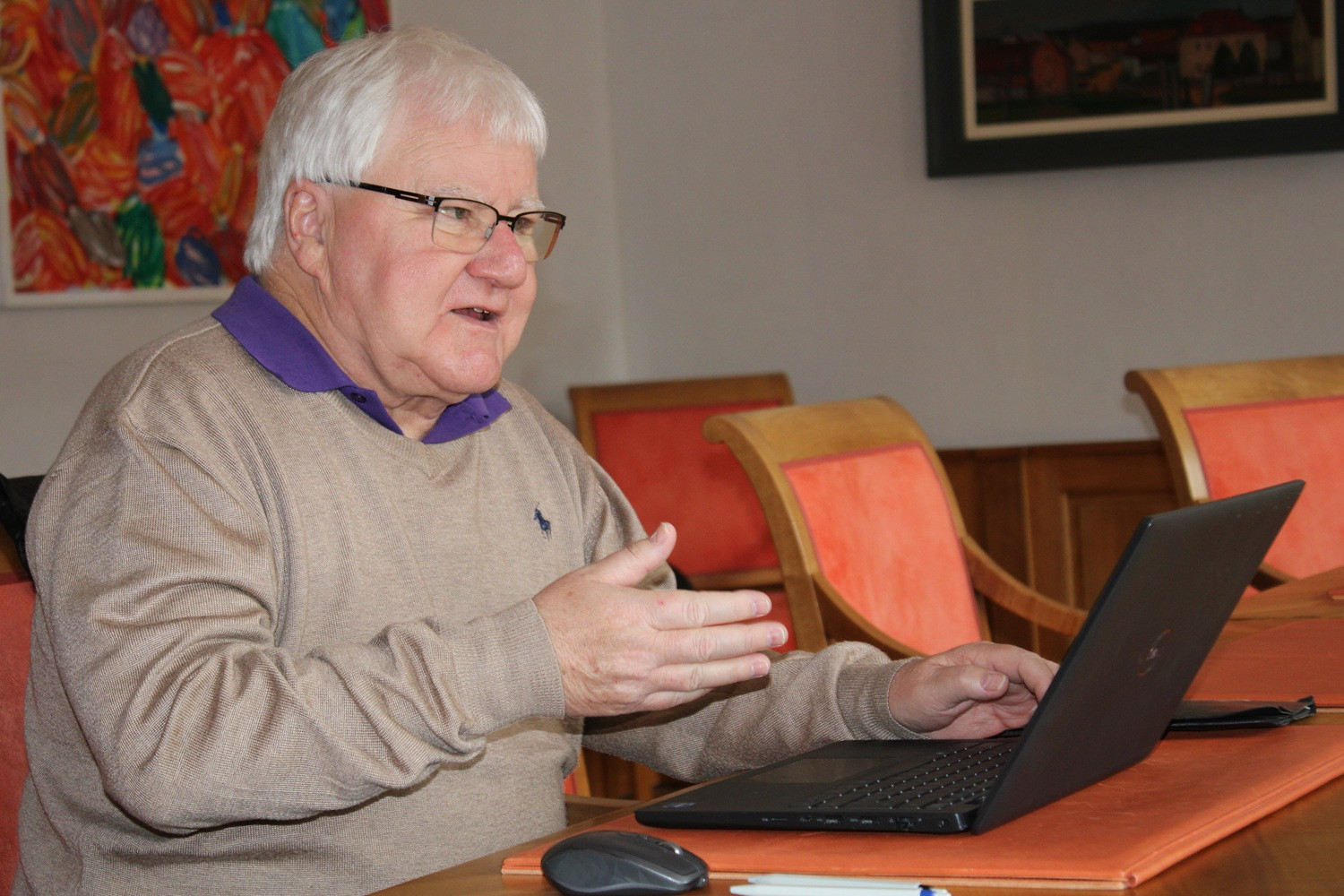
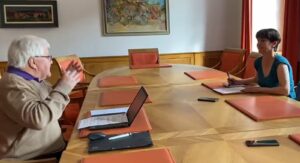
Switzerland’s political system is based on a strong federal structure in which local self-governance and direct democracy are firmly established. Within this framework, even the redrawing of cantonal borders can be carried out democratically. The transfer of the municipality of Moutier from the Canton of Bern to the Canton of Jura illustrates how long-standing questions of identity and political affiliation can be resolved through voting and legal processes. After decades of debate, known as the “Jura Question,” the transfer finally took effect on January 1, 2026. Fatoş Demirtaş and Necat Ayaz spoke with Marcel Winistoerfer, who has been mayor of Moutier for ten years and has long been actively involved in the municipality’s accession to the Canton of Jura. The interview was conducted in German.
What would you say about the history of Moutier’s participation in the Canton of Jura? What are the historical and political significance of the participation?
Moutier belonged to the Canton of Bern from 1815 onwards, more precisely since the Congress of Vienna. Bern received the Jura region as compensation for the losses of Vaud and Aargau, which became independent cantons. It then took over 200 years before the town finally joined the Canton of Jura.
It was a complicated story involving numerous efforts to establish the Canton of Jura and Moutier’s affiliation with it. Initially, the northern part of Jura pushed for the creation of a new canton, while the majority of the southern part believed it should remain part of the Canton of Bern. Ten months later, a second vote was held. Those who had voted “no” cast their ballots again and ultimately decided to remain with Bern. This occurred on March 16, 1975. On September 24 of the same year, the municipalities of the districts that had remained loyal to the Canton of Bern had another opportunity to vote on rejoining the Canton of Jura. As a result, the three northern districts formed the Canton of Jura, while the three southern districts remained part of the Canton of Bern. This formed the basis of the agreement.
However, the votes in Moutier were always very close. In the first vote in 1974, the margin was approximately 80 votes out of more than 4,000 eligible voters. The second time, in April 1975, the vote was somewhat larger, and in September of the same year, it was even larger again. The debate continued here in Moutier, and by 1982, a majority of Jura supporters had already been elected to the municipal council. Four years later, in 1986, a Jura native was elected mayor for the first time: Jean-Rémy Chalverat. Subsequently, more and more Jura supporters gained seats on the municipal and city councils. Mr. Chalverat served for eight years before Maxime Zuber took over. He was mayor of Moutier for over 21 years and gave us another chance for change. But it took 30 years before it finally happened. An Interjura Assembly with representatives from Bern and the Jura region was established for this purpose.
In 2013, the Canton of Jura and the Bernese Jura were able to vote again on whether they wanted to join forces. The vote made it clear that the populations wanted to remain in their existing cantons. In Moutier, the residents voted in favor of joining the Canton of Jura in 2013. In the 2017 referendum, the municipality voted again in favor of joining, with a lead of over 130 votes – the lead steadily growing. However, the Prefecture of the Bernese Jura and later the Bern Administrative Court overturned the result. It took another four years until the final vote on March 28, 2021. And finally, another four and a half years passed before we actually became part of the Canton of Jura on January 1, 2026. It’s a very long story.
In 2013, Moutier voted to join Jura. What do you think were the main reasons for this?
The main reasons are geographical proximity and culture. We speak French and belong to a canton that is entirely French-speaking, like the cantons of Vaud or Neuchâtel. In that sense, it feels like home. Personally, I’ve always felt very connected to the Jura region. I studied in Bern and for forty years I was a teacher in Perrefitte and Moutier, and my employer was the Canton of Bern. I was also a member of the Conseil du Jura Bernois (Bernese Jura Council). Despite all that, I never really felt like I belonged to the Canton of Bern.
When I think back to the first referendums, I was about 17 or 18 years old. At that time, the Bernese authorities cracked down very hard on the pro-Jura movement. The Bernese police came here and used tear gas and water cannons against the population. There were no fatalities, but the police presence was very heavy. That left a strong impression.

Another point is religion. In the first referendums from 1970 to 1975, the pattern was almost exactly the same: Catholic communities joined the Canton of Jura, while Protestant communities remained with the Canton of Bern. That, too, was an important factor. Today, people don’t go to church as often. The churches are mostly empty. Yet somehow, this identity lives on in people’s hearts. Moutier, by the way, was the first Protestant town to join the Canton of Jura.
It takes a lot of time and energy for people to realize they want a change of course. But ultimately, we succeeded. The small Canton of Jura stood up to the much larger Canton of Bern, and everything went peacefully and without violence. That’s the beauty of this process.
In the 2017 referendum, supporters of joining Jura faced opponents of remaining with Bern. Can we say that this political divide has now been overcome?
It’s true that the population was divided in the 2017 referendum. This division persists today. Around 55% voted in favor of joining Jura, while about 45% were not enthusiastic.
That’s precisely my task – and that of my colleagues on the municipal council – to ensure that more and more people gradually become involved in this new project. These things take time. It might take twenty years for people to fully settle into the Canton of Jura. But things are considerably calmer today than when I was young. Back then, the situation here sometimes resembled that in Belfast, where two opposing movements were at odds – one fighting for annexation to Jura, the other defending the union with Bern.
When the Canton of Jura was founded fifty years ago, 40% of the population was also against its creation. Today, probably only about 10% still hold that view. Over time, people accept the new situation.

After this tense referendum process, do you expect a transitional phase until the social situation calms down? How likely is it that a shared culture will emerge in Moutier during this process?
I wouldn’t say everything is completely calm, but overall it’s gone quite well. The whole process has been relatively peaceful, and people are gradually accepting the situation. Many residents now realize that the time has come: Moutier belongs to the Canton of Jura, and we have to live with that reality. Those who don’t want to accept it can, of course, move to one of the nearby villages or settle elsewhere. That’s always possible. But most are staying here and adapting to the new situation. As for a shared culture: everyone here speaks French. There are no German-language schools in Moutier; all instruction is in French. However, some residents still think we should have stayed in the Canton of Bern. They often say that Bern is a larger and wealthier canton and that life there might be better.
It is also true that the Canton of Bern has a French-speaking minority. Around ten percent of the population speaks French, mainly in the Bernese Jura and in the bilingual city of Biel. Some believe that this arrangement works well and that the Bernese authorities take care of the French-speaking population. For example, there are seven ministers in the Bernese government, and traditionally one of them comes from the French-speaking part of the canton. Currently, this is Pierre-Alain Schnegg. However, he naturally represents the Canton of Bern, and his political loyalty lies with Bern.
Ultimately, however, the residents of Moutier voted to join the Canton of Jura. In the final result, the difference was about 300 votes – roughly 55% in favor and 45% against. Today, the result would probably look similar, perhaps 57% in favor. So the division still exists, but it has become less contentious. People continue to live together, and over time, a shared civic culture will likely develop again.

Beyond identity and language, what concrete effects would joining the Canton of Jura have on everyday life?
Language and culture will not change significantly. French is also spoken in the Bernese Jura, so everyday life will continue in the familiar linguistic environment.
The main difference lies in the size of the canton. Bern is a very large canton with around one million inhabitants. The Canton of Jura is considerably smaller. With Moutier, it now has approximately 75,000 inhabitants. As a result, the relationship between citizens and authorities is somewhat closer. In everyday life, however, most people will not experience any dramatic changes. Families will continue to live as usual. It’s not accurate to say that people will suddenly become richer or poorer. In some areas things are a little better, in others perhaps a little worse, but overall, life remains quite similar.
One area where differences exist is education. Teachers in the Canton of Bern are paid slightly better than those in the Canton of Jura. As a teacher myself—I worked in the Bernese school system for forty years—I am very familiar with this issue. We are currently discussing these differences with the teachers and the cantonal authorities. The schools in Moutier will remain in the Bernese school system until the end of the school year. The transition to the Jura school system will take place in the summer of 2026. So there is still some time to organize everything properly.
There are also minor differences in taxes and administrative costs. Many people pay slightly less tax in the Canton of Jura, although wealthier taxpayers may pay slightly more. On the other hand, vehicle registration plates are somewhat more expensive, and the costs of buying real estate can also be slightly higher.
Another difference concerns administration. In the canton of Jura, the administration is more closely monitored due to the canton’s smaller size. As a teacher in Bern, I only had a school inspector visit four times in forty years. He came in, observed part of the lesson, said it was going well, and that was it. Teachers had a lot of freedom. In the canton of Jura, the system is somewhat more attentive and closer to the schools. The inspectors come more frequently and give more feedback on the work being done. This reflects the smaller size of the canton.
There are also practical advantages. Instead of traveling to Bern—which takes about an hour by train—we now go to the cantonal administration in Delémont. That’s much closer. In Bern, you also often have to speak German, which isn’t always easy here. The change is also significant politically. The Bern cantonal parliament had 160 representatives; Moutier had only two. The Jura cantonal parliament has 60 representatives, and we now have seven. This gives the town a much stronger voice.

Can one say that the decades-long Jura question has now been resolved?
In many respects, yes, but some minor questions remain open. Considering that it took around forty years for Moutier to join the Canton of Jura, it becomes clear how protracted such processes can be. For example, the nearby village of Belprahon also considered joining the Canton of Jura. In the referendum, they lost by only nine votes. That’s an extremely close result. Some residents still feel connected to the Jura question, but it’s unclear whether the balance of power has shifted since then.
These processes are very slow. Even in a small village, it would probably take at least twenty-five years before such a question could realistically be raised again. And the Bernese authorities have little interest in reviving discussions that could lead to the loss of another municipality. So, practically speaking, the Jura question is largely settled today. But history shows that political questions of this kind can sometimes resurface after many years.
Is there still a possibility that a stronger autonomy movement will develop in the Bernese Jura?
At the moment, I don’t think so. In the 2013 referendum, the people of the Bernese Jura clearly expressed their desire to remain part of the Canton of Bern. The result was unequivocal, so the issue is no longer really up for political debate. Of course, one can never rule out the possibility of things changing. Political attitudes can shift over time. We have shown that democratic change is possible in Switzerland when people are determined and patient.
However, the situation is different for the Bernese Jura. The region is increasingly orienting itself towards the city of Biel. With around 60,000 inhabitants, including approximately 20,000 French speakers, Biel is a significantly larger urban center. Many services for the Bernese Jura are gradually being centralized there. As a result, Biel is becoming the main center of the region, and the Bernese Jura itself is losing influence.
The only place where the discussion might still be held is Belprahon, but there is currently no legal basis to raise the question again. Creating such a legal framework could take decades. An international comparison shows that similar problems exist elsewhere – for example, in Catalonia or Scotland – but even there the political processes are extremely complex. Border changes through democratic means are always very difficult.
How did you personally feel after this long struggle when the final result was revealed?
One of the most moving moments for me was the first vote in June 2017, even though it was later annulled. It was a very hot day, around 30 degrees Celsius, and we had to wait until evening for the final result. At that point, the difference was only about 140 votes. We were waiting here in the building, and outside, people had gathered all the way to the school across the street – my old primary school.
When the window opened and the result was announced, I knew I had to go outside and talk to those people. They had been waiting there in the heat, hoping for the result. It was a very emotional moment for everyone.
Another moment I will never forget was when the changeover officially came into effect in January 2026. On the first day, many residents went to the authorities to pick up their new vehicle registration plates. Previously, we had Bernese license plates with the bear symbol – “BE” – and now we have Jura license plates with the designation “JU”. I went back a little later to pick up my new license plate. They gave me a special number: 180617, which corresponds to the date of the 2017 election, which means so much to me.
I had once mentioned in a conversation that this date was very important to me, but I had no idea they would remember it. When the president of the cantonal government presented me with the number, it was a very moving moment. I will cherish these memories for the rest of my life.
My questions end here. Before we say goodbye, is there any other aspect you would like to add?
We are still in a transition phase. There are administrative details that will take another three to four years to finalize. My biggest concern right now is the demographic decline. Fifty years ago, Moutier had about 8,800 inhabitants; today, it has only around 7,100. In the last ten years alone, we have lost about 400 residents. However, Moutier continues to possess a high level of expertise in precision mechanics and craftsmanship. We host an internationally renowned trade fair every two years, and the town remains an important center for this industry. I hope that in the coming years we will not only settle in well in the Canton of Jura, but also reverse the demographic decline and attract new residents.
To read the interview in German, download it here
—————————-
Fatoş Demirtaş


A Kurdish journalist and former press officer for the Municipality of Baglar (Amed/Diyarbakır), Fatoş Demirtaş began her career at the Azadiya Welat and Gundem newspapers . She has lived in Switzerland since 2019 as a political refugee after being removed from her post in Turkey.
Necat Ayaz

Necat Ayaz is a Brussels-based journalist specializing in Kurdish politics and national movements, with a particular focus on self-determination and democratic governance.

