




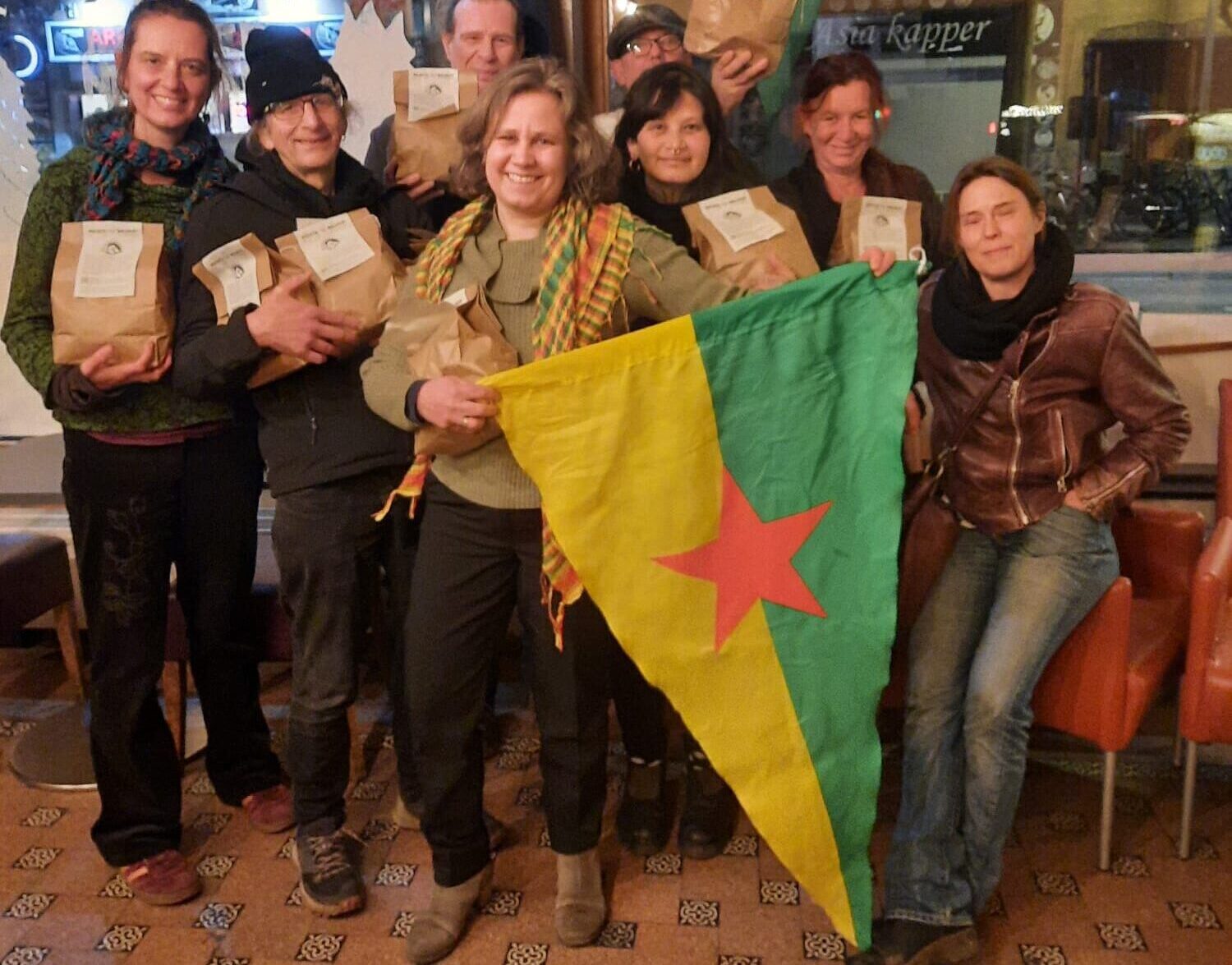
A new solidarity initiative in Belgium is mobilising local farmers and citizens in support of Kurdish communities in Rojava, also known as North and East Syria. Under the name “Pataten voor Rojava,” (in French, “Patates pour Le Rojava) the campaign connects the sale of Belgian organic potatoes with humanitarian aid for a region facing mounting economic and security challenges.
The initiative was launched by a Flemish farmer in collaboration with Semalka, a Flemish NGO based in Leuven. The campaign officially kicked off on Thursday evening, 19 February, at café Het Groot Ongelijk in Kessel-Lo, where supporters gathered to collect pre-packed bags of potatoes prepared earlier that day.
Under the scheme, a two-kilogram bag of potatoes is sold for five euros. Half of the proceeds go directly to the farmer while the other half is allocated to medical aid and essential supplies for the Kurdish region in Syria. Supporters who cannot attend in person can participate by transferring five euros, or multiples thereof, to Semalka’s account.
Building bridges between Belgium and Rojava

Founded in 2024 by David Dessers, Stijn Verhofstadt and Deirdre Maes, Semalka describes its mission as building bridges between Belgium and North East Syria. The organisation highlights that in the region, Kurdish communities — alongside Assyrian and Arab populations — have been working for more than a decade to establish a democratic, multi-ethnic and pluralistic society, with a strong emphasis on gender equality.
Through “Pataten voor Rojava,” organisers say they aim to express practical solidarity: supporting sustainable local agriculture in Belgium while contributing to urgently needed humanitarian assistance abroad. The initiative reflects a broader tradition of grassroots internationalism in Flanders, where civil society groups have long engaged in solidarity campaigns linking local action to global causes.

