




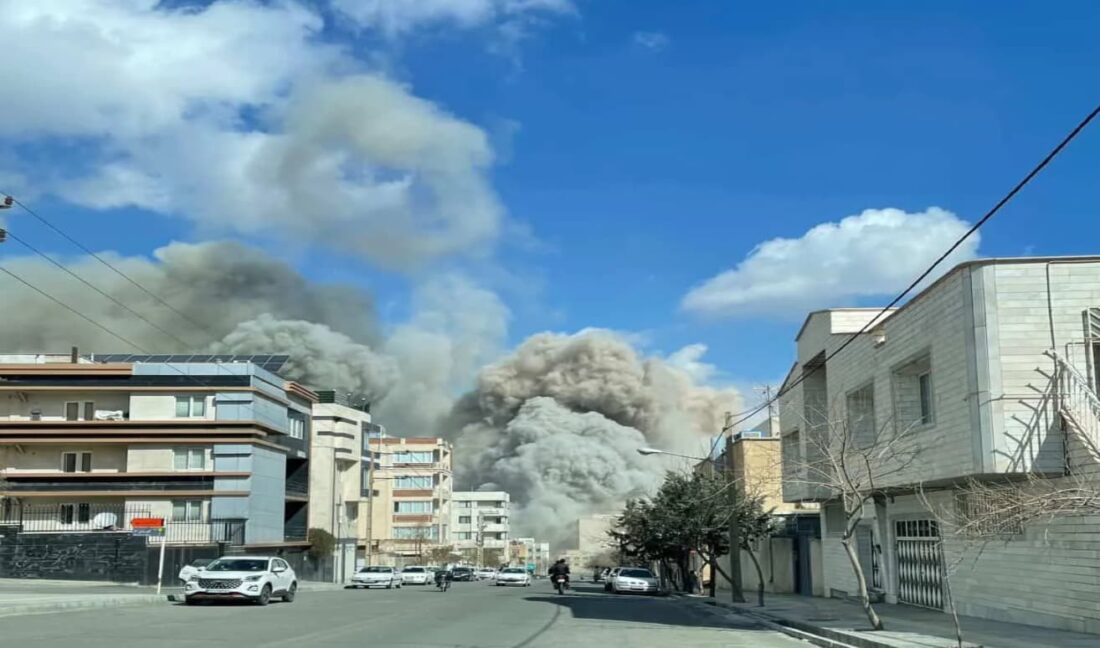
Airstrikes across Iran continue to hit key military and strategic infrastructure, particularly in Tehran and along the Gulf coast. However, according to The National Context, a distinct and revealing pattern is emerging in the country’s Kurdish west, where attacks are concentrating on internal security institutions instead of conventional warfighting assets.
While strikes in the capital have targeted command centres, defence institutions, and state infrastructure, and operations along the Gulf have focused on naval bases, missile sites, and drone facilities, the western corridor stretching from Kermanshah through Kurdistan Province to Urmia has seen a different category of targets.
Security infrastructure in the crosshairs
Based on confirmed local reporting compiled by The National Context, airstrikes in cities including Sanandaj, Marivan, Mahabad and Kermanshah have hit police stations, intelligence headquarters, border guard commands, and bases belonging to the Islamic Revolutionary Guard Corps (IRGC) and Basij forces. These facilities play a central role in monitoring Kurdish opposition groups, controlling cross-border movement, gathering intelligence on political networks, and suppressing domestic unrest.
The report notes that many of the same security institutions were involved in crackdowns on Kurdish protests earlier this year. By striking border guard headquarters and intelligence centres, the campaign appears aimed at dismantling the surveillance and enforcement grid that secures nearly 400 kilometres of frontier with Iraq and maintains internal control in restive provinces.
According to The National Context, the target profile in the Kurdish west differs sharply from the strategic military and nuclear sites hit elsewhere in the country. The emerging pattern suggests an effort to weaken Tehran’s internal security architecture in the region, potentially creating space for localised instability rather than directly targeting Iran’s external strike capabilities.

