




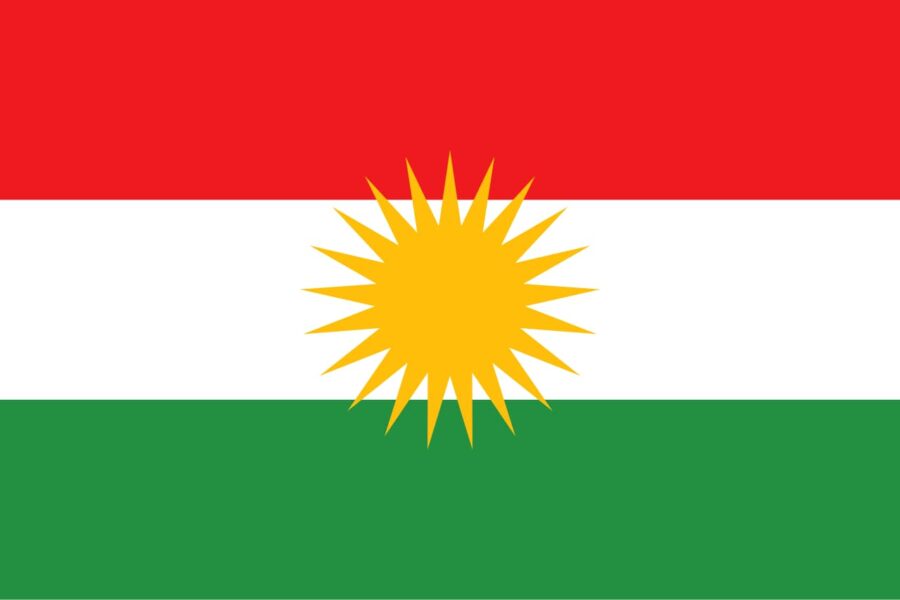
Essence of the news
- The Kurdistan Regional Government (KRG) expanded diplomatic engagement at the Munich Security Conference.
- Nechirvan Barzani met US Secretary of State Marco Rubio and French President Emmanuel Macron.
- The KRG continues coordinating with the Syrian Democratic Forces in eastern Syria.
The Kurdistan Region of Iraq emerged as a key diplomatic actor at this year’s Munich Security Conference, holding a series of high-level meetings that underscored its growing geopolitical relevance.
As The Jerusalem Post reported, the Kurdistan Regional Government (KRG) has “become a major player in the region,” leveraging its strategic geography and political relationships.
According to statements cited by The Jerusalem Post, President Nechirvan Barzani discussed “US relations with Iraq and the Kurdistan Region, as well as the prospects for mutual cooperation,” emphasizing continued strategic coordination.
While formally an autonomous region within Iraq, the KRG’s diplomatic outreach “often appears larger than Iraq’s,” The Jerusalem Post noted, highlighting the unusual global standing of a non-sovereign regional government.
US-KRG talks focus on Syria
Barzani’s meeting with US Secretary of State Marco Rubio focused heavily on Syria and regional security.
Following the talks, The Jerusalem Post cited Kurdish sources as saying that both sides emphasized “the importance of protecting the rights of Kurds and all communities within a united Syria.”
The KRG has played what The Jerusalem Post described as a role in helping “smooth the transition in eastern Syria,” working with Damascus and the Syrian Democratic Forces. At the same time, it continues to host US and coalition forces involved in anti-ISIS operations.
The report noted that amid tensions and shifting alliances, the Kurdistan Region stands at “the crossroads of the Middle East,” acting as a geopolitical hinge in a period of regional uncertainty.
Engagement with France and US politicians
Barzani also met with French President Emmanuel Macron. The Jerusalem Post highlighted France’s longstanding engagement with Kurdish actors and its role in the campaign against ISIS.
France, the former colonial power in Syria, continues to take an interest in stabilization efforts, particularly in coordination with Kurdish-led forces.
In addition, discussions with a US congressional delegation underscored what The Jerusalem Post described as bipartisan recognition of the Kurdistan Region’s role as “a factor of stability in the region,” especially amid tensions involving Iran and Turkey.
A unique autonomous actor
Globally, few autonomous regions wield comparable diplomatic weight. As The Jerusalem Post observed, the Kurdistan Region is “unique” in combining autonomous status with broad international engagement.
By prioritizing participation in high-level forums such as Munich and Davos, Erbil seeks to strengthen both its economic trajectory and geopolitical standing.
As regional uncertainty persists, the Kurdistan Region appears intent on translating its strategic position into sustained diplomatic influence — a development that, according to The Jerusalem Post, increasingly places it among the Middle East’s key diplomatic players.

