




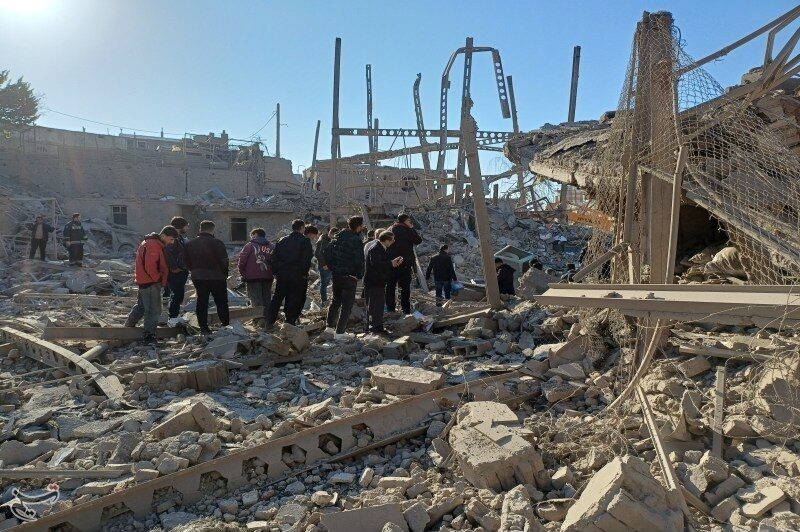
The conflict between the United States, Israel, and Iran intensified dramatically on its fourth day, with Israeli forces conducting extensive airstrikes on military targets in Iran’s capital, Tehran, and Lebanon’s capital, Beirut, while Iran retaliated with missile and drone barrages across the Gulf region.
Israel targets Tehran and Beirut
Israeli military officials confirmed early Tuesday that the Israel Defense Forces (IDF) carried out “extensive strikes” simultaneously in Tehran and Beirut. Targets in Tehran included Iranian military sites, command infrastructure, and reportedly the state broadcaster. In Beirut, strikes focused on Iran-backed Hezbollah command centers and weapons storage facilities in southern suburbs, blanketing parts of the skyline in smoke. Israeli Defense Minister Israel Katz stated that these operations aim to degrade Iranian regime capabilities and prevent further threats to Israeli communities.
Iranian missiles and drones hit Gulf states
In response, Iran launched overnight waves of ballistic missiles and drones targeting multiple US-allied Gulf states, including Saudi Arabia, the United Arab Emirates, Qatar, Jordan, Kuwait, and Bahrain. Saudi defenses intercepted several threats near Riyadh and Al-Kharj, but the US Embassy in Riyadh was struck by two drones, causing a limited fire, minor material damage, and no immediate casualties. Witnesses reported loud blasts and smoke rising from the compound. The US Embassy in Kuwait was also hit earlier, leading to its indefinite closure. Iran’s Islamic Revolutionary Guard Corps (IRGC) claimed responsibility for some attacks, vowing further escalation.
US diplomatic evacuations and warnings
The US State Department ordered the evacuation of non-emergency personnel and families from embassies and consulates in Iraq, Bahrain, Jordan, Qatar, the UAE, and other locations, citing heightened regional tensions. A shelter-in-place order was issued for US citizens in parts of Saudi Arabia, and Americans were urged to leave Iran, Israel, Egypt, Lebanon, and several other countries immediately.
Ground operations in Southern Lebanon
Israeli troops are actively operating in southern Lebanon to secure border areas and counter Hezbollah threats. The IDF reported advances to protect northern Israeli communities from direct fire, following Hezbollah’s claims of drone and rocket strikes on Israeli military bases, including Ramat David, Meron, and sites in the occupied Golan Heights.
Broader impact and casualties
Casualties continue to mount: Iranian sources report hundreds killed (over 500–700 in strikes), with deaths in Israel, Lebanon, and Gulf states. Iran has reportedly closed the Strait of Hormuz, threatening global oil supplies and driving price surges. The conflict, sparked by prior escalations including the killing of Iran’s Supreme Leader Ayatollah Ali Khamenei, shows signs of regime change objectives from Israel, with no immediate diplomatic resolution in sight.

