




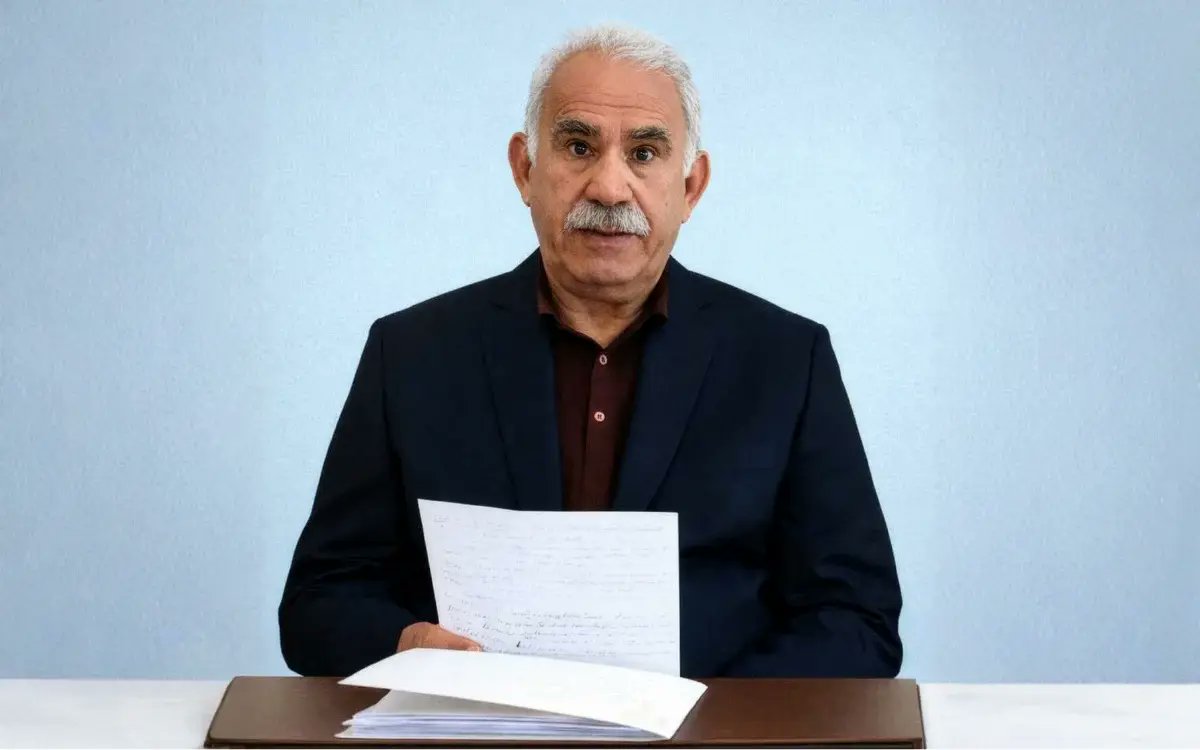
Abdullah Öcalan stated that the ongoing political process has reached a decisive stage and argued that a democratic transformation would strengthen the Turkish Republic. According to the statement released after the meeting between Öcalan and a delegation from the DEM Party on 27 March 2026, dialogue, political participation, and a comprehensive legal framework are considered essential elements for a sustainable resolution. Öcalan emphasized that the end of the armed struggle marks a transition toward a “Democratic Republic”, presenting this shift as an opportunity to reinforce stability and social cohesion.
Öcalan also linked the process in Turkey to wider regional dynamics, including tensions related to Iran, which he described as shaped by competing geopolitical lines. Within this context, he framed the “Peace and Democratic Society Process” as an alternative path based on coexistence and democratic integration. He highlighted the historical relationship between Anatolia and Mesopotamia as a foundation for a political model that aims to integrate diverse identities through citizenship rights, political freedoms, and inclusive democratic participation. According to his argument, such a framework could contribute both to democratization and to the long-term security of the state.
Discursive framework and political implications
Öcalan’s discourse prominently employs geographic-civilizational concepts such as “Anatolia” and “Mesopotamia” instead of explicitly emphasizing Kurdistan as a political or territorial reference. This terminology frames the issue within a broader regional and historical narrative, presenting the proposed solution as a civilizational integration project rather than a national question centered on Kurdish self-determination.
By prioritizing concepts like “democratic integration” and “common life”, the language shifts attention from Kurdish collective political recognition toward a model that emphasizes the security and stability of the Turkish state and its democratization. In this framework, Kurdish identity appears mainly through citizenship, rights, and participation within the Republic, rather than through recognition of Kurdistan as a distinct political entity.
Critics argue that this linguistic framework may render Kurds less visible as a people with territorial and political claims, even while Öcalan presents himself as addressing Kurdish concerns. The emphasis on strengthening the Republic and reducing perceived security concerns suggests that state security, unity, and gradual democratization are central pillars of the proposed approach.

