






In a recent analysis on Subtrack, Karim Franceschi challenges the widely used narrative that Kurdish-led forces in northern Syria are being “integrated” into the Syrian state.
According to Franceschi, the process unfolding between Damascus and the Syrian Democratic Forces (SDF) represents something far more consequential: the gradual severing of the bond between the political leadership of North and East Syria and the society that supported its revolutionary project.
“This is not integration,” he writes. “It is severance.”
Franceschi argues that the real center of gravity of the Kurdish-led administration has never been territory or institutions, but the trust between its leadership and its population. He suggests that Damascus is now pursuing a strategy aimed precisely at weakening that connection.
A military collapse and a political turning point
Franceschi points to the January offensive as a decisive moment.
During the campaign, territories held by the SDF across northern Syria reportedly collapsed quickly, with areas previously taken from ISIS — including Raqqa and Deir ez-Zor — falling within days. According to Franceschi, only the Kurdish heartlands such as Kobani and Hasakah resisted the advance.
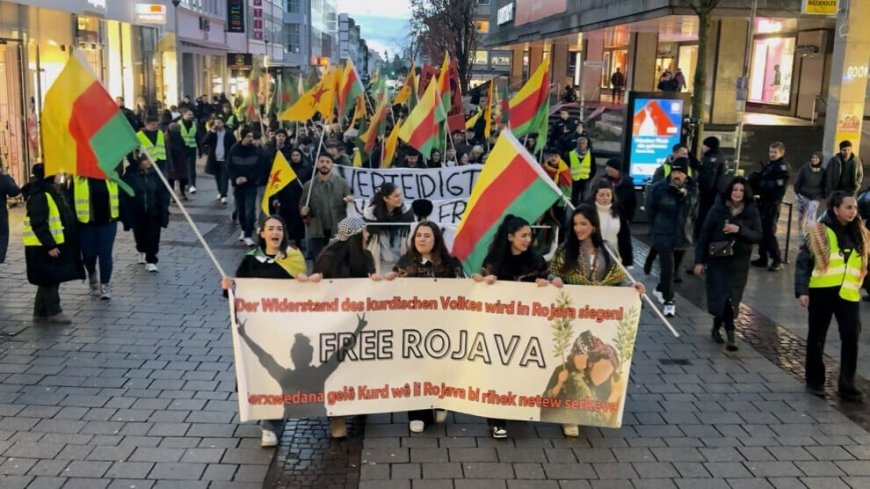
The turning point came when Kurdish society mobilized, with civilians, political leaders, and diaspora communities reacting strongly. This mobilization raised fears among regional actors that the conflict could escalate into a broader transnational Kurdish crisis.
Shortly afterward, an agreement was signed on January 29. Franceschi describes it not as a diplomatic victory but as a “conditional surrender” that halted the offensive while opening the door to deeper political concessions.
A “surgical” strategy by Damascus
Since the agreement, Franceschi says Damascus has pursued what he calls a “surgical campaign” to dismantle Kurdish autonomy without renewed military confrontation.
Instead of tanks and artillery, he argues, the strategy relies on political pressure, symbolic gestures, and integration demands — including efforts to place Kurdish security structures under central Syrian command.
These developments, Franceschi warns, risk creating fractures within the Kurdish movement itself. Controversies such as prisoner exchanges and public cooperation with Syrian officials have already sparked criticism from fighters and supporters.
In the end, Franceschi concludes that the survival of the Kurdish political project depends on one fragile factor: whether the bond between the leadership and the people — what he calls “the rope” — can hold under the current pressure.
If it breaks, he writes, the result could be unprecedented: “the dismantling of a revolution without firing a single shot.”
