






The United States has begun engaging Iranian Kurdish opposition groups as the conflict with Iran intensifies, raising questions about the role the Kurdish minority could play in the country’s future.
In an analysis published by France 24, journalist Shabnam von Hein reports that President Donald Trump contacted Kurdish leaders shortly after the launch of the US-Israeli military campaign dubbed “Operation Epic Fury”. According to reports cited by the outlet, Trump spoke with Iraqi Kurdish leaders and later with Mustafa Hijri, head of the Democratic Party of Iranian Kurdistan (KDPI).
Experts caution that the move may be pragmatic rather than strategic. As analyst Guney Yildiz told France 24, the outreach appears to be “a tactical activation, not a strategic partnership”. He added that Kurdish groups were approached after other Iranian opposition networks failed to demonstrate strong organisational reach inside the country.
The possibility of Kurdish involvement also raises fears among Kurdish leaders that they could once again be abandoned by international allies once the geopolitical calculus changes.
Kurds: organised, armed and influential
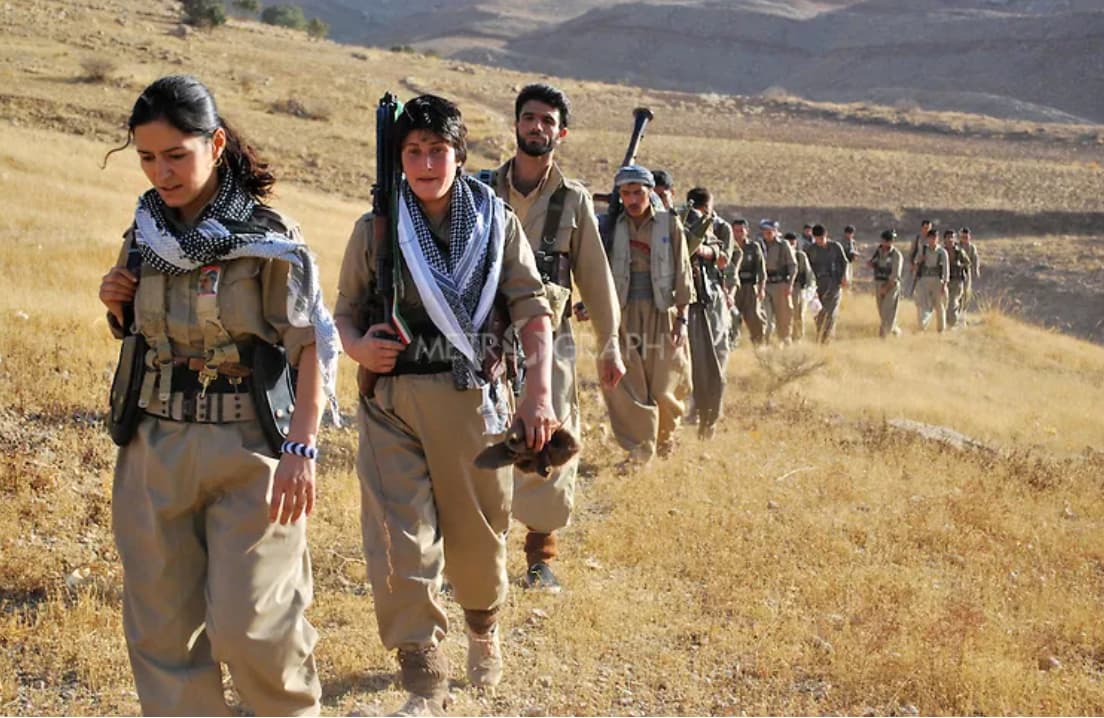
Iran’s Kurdish minority — estimated at 10% to 17% of the population — has a long history of resisting Tehran and maintains organised political movements and armed groups based along the Iran-Iraq border.
According to the France 24 analysis, Kurdish parties recently formed the Coalition of Political Forces of Iranian Kurdistan, bringing together several major groups, including the KDPI and fighters who previously battled the Islamic State group.
Their organisational strength and ties to local communities make them one of the few opposition forces capable of mobilising inside Iran. As Middle East expert Shukriya Bradost explained to France 24, “the majority of families have lost at least one member in the war against the Islamic regime,” giving Kurdish movements deep roots in the region.
However, analysts warn that Kurdish leaders remain wary. Past US alliances with Kurdish groups in the Middle East have often ended abruptly, leaving them exposed to retaliation — a fear that continues to shape their calculations today.
