






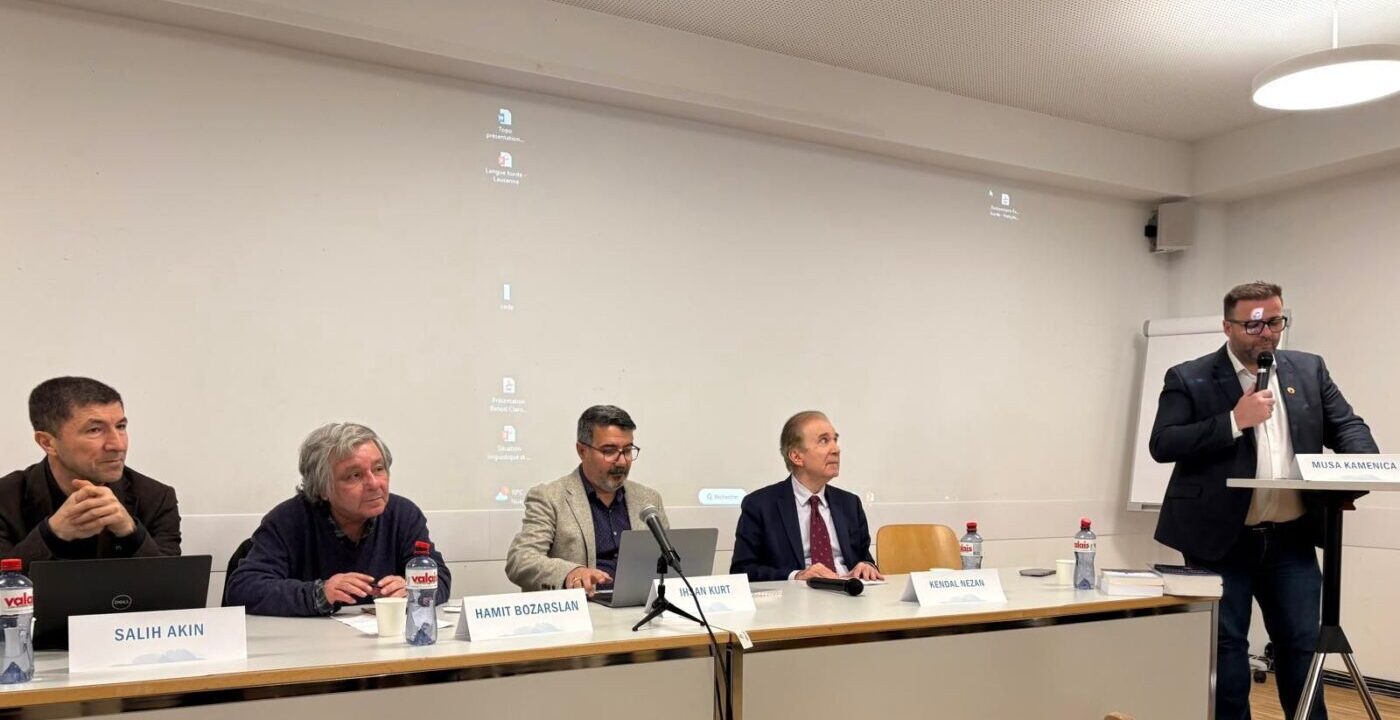
Swiss-based writer Ihsan Kurt, president of AFKIV, reports in Le Courier on a conference held in Lausanne to mark International Mother Language Day under the auspices of UNESCO. His article underscores a central message: the Kurdish cause is not only military or geopolitical — it is profoundly linguistic, cultural and social.
Language as existence and resistance
Quoting Mexican Nobel laureate Octavio Paz — “Each language is a vision of the world” — the conference placed the Kurdish language at the core of Kurdish identity. Novelist Mehmed Uzun, who spent nearly three decades in exile, once defined writing in Kurdish as “an act of existence,” a phrase recalled during the event. For a people of more than 40 million spread across Turkey, Iraq, Iran and Syria, language remains inseparable from political recognition.
Speakers emphasized that defending Kurdish — teaching it, publishing in it, standardizing it — is a political act in regions where it has long faced restrictions and assimilation policies.
Beyond War: A democratic aspiration
Historian Hamit Bozarslan reminded participants that the Kurdish question must be understood in its historical depth, beyond images of conflict. The experience of Kurdish self-administration in northern Syria and the long-standing autonomy demands in Iraq illustrate a broader aspiration for democracy and pluralism.
Recalling Iraqi Kurdish leader Mustafa Barzani — “Autonomy for Kurdistan, democracy for Iraq” — the conference concluded that the Kurdish struggle is fundamentally about recognition: of a people, a culture, and above all, a language that continues to survive as a powerful symbol of resistance.
